Badri Sahaba Names Collection
Discover the 313 brave companions of Prophet Muhammad (ﷺ) who participated in the Battle of Badr. These honored individuals hold a special status in Islamic history and are promised Paradise.Badri Sahaba names are not just historical records—they represent real personalities who lived with strong character and faith.
Download the complete list of all 313 Badri Sahaba names in PDF format.
Showing 50 of 313 Badri Sahaba
Abu Bakr As-Siddiq
أبو بكر الصديق
As-Siddiq (The Truthful), Atiq (Freed by Allah from Hellfire)
Abu Bakr means 'father of the young camel' or 'father of the young one'. His real name was Abdullah ibn Abi Quhafa. He was the closest companion of the Prophet and the first adult male to accept Islam. Known for his unwavering truthfulness and faith.
Umar ibn al-Khattab
عمر بن الخطاب
Al-Farooq (The one who distinguishes between truth and falsehood), Amir al-Mu'minin
Umar means 'life' or 'flourishing'. He was the second Caliph of Islam, known for his justice, strong leadership, and pivotal role in expanding the Islamic state. His conversion strengthened the Muslim community greatly.
Uthman ibn Affan
عثمان بن عفان
Dhul-Nurayn (Possessor of Two Lights), Amir al-Mu'minin
Uthman means 'baby bustard chick' or 'the one with pure character'. He was the third Caliph and known for his immense generosity, modesty, and sponsoring the compilation of the Quran into a standardized Mushaf.
Ali ibn Abi Talib
علي بن أبي طالب
Asadullah (Lion of Allah), Amir al-Mu'minin, Al-Murtada
Ali means 'elevated', 'noble', or 'sublime'. He was the cousin and son-in-law of the Prophet Muhammad, the fourth Caliph, known for his bravery, wisdom, and deep knowledge of Islam.
Talha ibn Ubaydullah
طلحة بن عبيدالله
Al-Fayyad (The Generous), Al-Khayr (The Good)
Talha refers to a type of tree (acacia). He was one of the ten promised paradise and known for his extraordinary bravery at the Battle of Uhud where he shielded the Prophet with his own body, resulting in a paralyzed hand.
Zubayr ibn al-Awwam
الزبير بن العوام
Hawari ar-Rasul (Disciple of the Messenger)
Zubayr means 'brave' or 'strong'. He was the cousin of the Prophet, one of the ten promised paradise, and the first to draw his sword for Islam. He was known for his exceptional bravery and military prowess.
Abd al-Rahman ibn Awf
عبدالرحمن بن عوف
Al-Ghani (The Wealthy One, given by companions due to his enormous wealth used for Islam)
Abd al-Rahman means 'servant of the Most Merciful'. He was one of the ten promised paradise and one of the wealthiest companions, yet known for his deep humility and extraordinary generosity in charity.
Sa'd ibn Abi Waqqas
سعد بن أبي وقاص
Faris al-Islam (Knight of Islam), Asad Allah fi ardih (Lion of Allah on His Earth)
Sa'd means 'happiness' or 'good fortune'. He was one of the ten promised paradise, the first to shoot an arrow in the cause of Islam, and the commander who led the Muslim forces to victory at the Battle of al-Qadisiyyah, conquering Persia.
Sa'id ibn Zayd
سعيد بن زيد
One of the Asharah Mubasharah (Ten Promised Paradise)
Sa'id means 'happy', 'fortunate', or 'blessed'. He was one of the ten promised paradise, among the earliest converts to Islam, and participated in many battles. His father Zayd ibn Amr had rejected idolatry even before the coming of Islam.
Abu Ubayda ibn al-Jarrah
أبو عبيدة بن الجراح
Amin al-Ummah (Trustee of the Ummah)
His real name was Amir ibn Abdullah. Abu Ubayda means 'father of Ubayda'. He was one of the ten promised paradise, known as the 'trustee of this Ummah' by the Prophet, and served as a great military commander in Syria.
Khadijah bint Khuwaylid
خديجة بنت خويلد
Umm al-Mu'minin (Mother of the Believers), Sayyidat Nisa al-Alamin (Leader of Women of the Worlds)
Khadijah means 'premature child' or 'born prematurely'. She was the first wife of the Prophet and the first person to accept Islam. She was a successful merchant and the first believer who supported the Prophet with her wealth and love.
Aisha bint Abi Bakr
عائشة بنت أبي بكر
Umm al-Mu'minin (Mother of the Believers), Al-Siddiqa (The Truthful)
Aisha means 'alive', 'well-living', or 'prosperous'. She was the daughter of Abu Bakr and beloved wife of the Prophet. She was one of the greatest scholars of Islam and narrated thousands of hadiths.
Fatimah bint Muhammad
فاطمة بنت محمد
Az-Zahra (The Radiant), Sayyidat Nisa Ahl al-Jannah (Leader of Women of Paradise)
Fatimah means 'one who weans an infant' or 'abstainer from wrong'. She was the youngest daughter of the Prophet and wife of Ali ibn Abi Talib. She is considered the leader of the women of paradise.
Hamza ibn Abd al-Muttalib
حمزة بن عبدالمطلب
Asadullah wa Asad Rasulihi (Lion of Allah and Lion of His Messenger), Sayyid al-Shuhada (Master of Martyrs)
Hamza means 'strong', 'steadfast lion'. He was the uncle of the Prophet and one of the mightiest warriors of early Islam. He accepted Islam after defending the Prophet from Abu Jahl's abuse.
Bilal ibn Rabah
بلال بن رباح
Muadhdhin ar-Rasul (The Caller to Prayer of the Messenger), Sayyid al-Mu'adhdhineen
Bilal means 'moisture of water' or 'wetting'. He was an Abyssinian slave who was among the first converts to Islam. Despite severe torture by his master Umayyah ibn Khalaf, he remained steadfast. He became the first Muadhdhin (caller to prayer) of Islam.
Abdullah ibn Masud
عبدالله بن مسعود
Sahib al-Sirr (Keeper of the Secret), Sahib al-Nalayn (Companion of the Sandals)
Abdullah means 'servant of Allah'. He was one of the earliest converts to Islam, the first to recite the Quran publicly in Makkah. He was known for his deep knowledge of the Quran and was recommended by the Prophet as one of four people to learn Quran from.
Abu Dharr al-Ghifari
أبو ذر الغفاري
Sidq al-Lisan (Truthful in Speech), Zahid al-Ummah (Ascetic of the Community)
His real name was Jundub ibn Junadah. Abu Dharr means 'father of Dharr'. He was among the earliest converts and known for his ascetic lifestyle, absolute truthfulness, and outspoken criticism of wealth accumulation.
Salman al-Farisi
سلمان الفارسي
Salman al-Khayr (Salman the Good), Ibn al-Islam (Son of Islam)
Salman means 'safe', 'peaceful', or 'unharmed'. He was a Persian who sought the truth from Christianity to eventually Islam, traveling across lands in his quest. He suggested digging the trench at the Battle of Khandaq.
Ammar ibn Yasir
عمار بن ياسر
Ibn al-Shuhada (Son of the Two Martyrs)
Ammar means 'one who lives long' or 'one who builds'. He was among the first Muslims and suffered severe torture alongside his parents. His mother Sumayyah was the first martyr of Islam.
Mus'ab ibn Umayr
مصعب بن عمير
Awwal Safir fil Islam (First Ambassador of Islam), Shahid Uhud
Mus'ab means 'difficult', 'unruly camel'. He was the first ambassador of Islam, sent to Madinah to teach its people about Islam before the Hijra. He gave up great wealth and comfort for Islam and died a martyr at Uhud.
Khalid ibn al-Walid
خالد بن الوليد
Sayf Allah al-Maslul (The Drawn Sword of Allah)
Khalid means 'immortal', 'eternal'. He was the greatest military general of early Islam, undefeated in over 100 battles. He accepted Islam after the Treaty of Hudaybiyyah and went on to lead decisive campaigns.
Abu Hurayra
أبو هريرة
Hafiz al-Hadith (Guardian of Hadith), Rawi al-Islam (Narrator of Islam)
His real name was Abd al-Rahman ibn Sakhr. Abu Hurayra means 'father of the kitten' — a name given to him by the Prophet because he used to carry a small cat. He is the most prolific narrator of hadith, narrating over 5000 traditions.
Anas ibn Malik
أنس بن مالك
Khadim Rasulillah (Servant of the Messenger of Allah)
Anas means 'friendly', 'sociable', 'human companionship'. He served the Prophet for ten years from the age of ten and narrated thousands of hadiths. He was the last surviving companion of the Prophet in Basra.
Zayd ibn Haritha
زيد بن حارثة
Hibb Rasulillah (Beloved of the Messenger of Allah)
Zayd means 'growth', 'abundance'. He was the adopted son of the Prophet and the only companion mentioned by name in the Quran (Surah Al-Ahzab). He was a beloved companion and great commander who died at the Battle of Mu'tah.
Usama ibn Zayd
أسامة بن زيد
Hibb ibn Hibb Rasulillah (Beloved son of the Beloved of the Messenger of Allah)
Usama means 'lion' or 'brave'. He was the son of Zayd ibn Haritha and was deeply loved by the Prophet, earning the title 'beloved son of the beloved'. He led a major expedition commanded by the Prophet on his deathbed.
Jabir ibn Abdullah
جابر بن عبدالله
Al-Ansari (The Helper)
Jabir means 'one who sets broken bones', 'one who restores'. He was among the companions who pledged allegiance at Aqabah. He participated in nineteen battles with the Prophet and narrated many hadiths.
Ibn Abbas
ابن عباس
Hibr al-Ummah (Scholar of the Ummah), Turjuman al-Quran (Interpreter of the Quran), Ra'is al-Mufassirin
His full name was Abdullah ibn Abbas. Abdullah means 'servant of Allah' and Abbas means 'stern-faced' or 'lion'. He was the cousin of the Prophet and the greatest scholar of the Quran among the companions.
Abu Musa al-Ash'ari
أبو موسى الأشعري
Al-Ash'ari (attributed to his tribe), Sahib al-Sawt al-Haseen (Owner of the Beautiful Voice)
His real name was Abdullah ibn Qays. He was from Yemen and known for his beautiful Quranic recitation. The Prophet compared his voice to the musical instruments of the family of Dawud.
Muadh ibn Jabal
معاذ بن جبل
Imam al-Ulama (Leader of the Scholars), A'lam al-Ummah bil Halal wal Haram
Muadh means 'protected', 'seeking refuge'. He was among the most knowledgeable companions and was sent by the Prophet to Yemen as a judge and teacher. He was known for his deep knowledge of halal and haram.
Hudhayfah ibn al-Yaman
حذيفة بن اليمان
Sahib Sirr Rasulillah (Keeper of the Messenger's Secret)
Hudhayfah means 'one who trims', 'cautious'. He was the keeper of the Prophet's secrets, especially regarding the hypocrites. He was known as 'Sahib al-Sirr' because the Prophet disclosed the names of hypocrites to him alone.
Abu Said al-Khudri
أبو سعيد الخدري
Al-Ansari (The Helper), Al-Khudri (from the tribe of Khudra)
His real name was Sa'd ibn Malik. He was an Ansari companion who narrated numerous hadiths about Islamic jurisprudence and the signs of the Day of Judgment. He was among the most prolific hadith narrators.
Ubaydah ibn al-Harith
عبيدة بن الحارث
Awwal Shahid fi Badr (First Martyr at Badr)
Ubaydah means 'little servant'. He was the cousin of the Prophet and the commander of the first military expedition in Islam. He was martyred at the Battle of Badr — the first companion to be martyred in a major battle.
Sad ibn Muadh
سعد بن معاذ
Sayyid al-Ansar (Chief of the Helpers), one whose death shook the Throne of Allah
Sa'd means 'happiness'. He was the chief of the Aws tribe in Madinah and one of the greatest Ansar companions. His death shook the Throne of Allah according to the Prophet's words. He arbitrated the fate of Banu Qurayza.
Ubayy ibn Ka'b
أبي بن كعب
Sayyid al-Qurra' (Master of the Reciters of Quran)
Ubayy means 'one who refuses humiliation' or 'one who is proud'. He was the foremost expert in Quranic recitation among the companions and was called Sayyid al-Qurra' (Master of Reciters). The Prophet instructed companions to learn Quran from him.
Zayd ibn Thabit
زيد بن ثابت
Katib al-Wahy (Scribe of the Revelation), Imam al-Qurra'
Zayd means 'growth', 'addition'. He was the personal scribe of the Prophet and learned multiple languages at the Prophet's request. He was tasked with compiling the Quran under Abu Bakr and standardizing it under Uthman.
Abu Talha al-Ansari
أبو طلحة الأنصاري
Faris al-Ansar (Knight of the Helpers)
His real name was Zayd ibn Sahl. Abu Talha means 'father of Talha'. He was a brave archer who served as a human shield for the Prophet at Uhud. He was known for his extraordinary wealth which he donated for Islam.
Umar ibn Abi Salama
عمر بن أبي سلمة
Rabi' al-Nabi (Foster child of the Prophet)
Umar means 'life'. He was the stepson of the Prophet, as his mother Umm Salama married the Prophet. He was among the companions who narrated hadiths about the Prophet's personal life.
Suhayl ibn Amr
سهيل بن عمرو
Khatib Quraysh (Orator of Quraysh)
Suhayl means 'easy', 'gentle', 'the star Canopus'. He was a leading Qurayshi orator who initially opposed Islam. After accepting Islam at the Conquest of Makkah, he became a sincere Muslim and participated in later campaigns.
Abu Sufyan ibn Harb
أبو سفيان بن حرب
Sayyid Quraysh (Chief of Quraysh), Abu al-Umara' (Father of Commanders)
His real name was Sakhr ibn Harb. Abu Sufyan means 'father of Sufyan'. He was the leader of Quraysh who opposed the Prophet for many years, eventually accepting Islam at the Conquest of Makkah and becoming a sincere Muslim.
Hind bint Abi Umayya (Umm Salama)
أم سلمة
Umm al-Mu'minin (Mother of the Believers)
Umm Salama's real name was Hind. She was the wife of the Prophet and among the most knowledgeable of his wives. She migrated twice for Islam (to Abyssinia and Madinah) and narrated many hadiths.
Zaynab bint Jahsh
زينب بنت جحش
Umm al-Mu'minin (Mother of the Believers), Zawwajaha Allah min fawq sab' samawat
Zaynab means 'fragrant tree' or 'decorated'. She was the cousin of the Prophet and was married to Zayd ibn Haritha before marrying the Prophet, as commanded by Allah. She was known for her generosity and handcraft.
Hafsa bint Umar
حفصة بنت عمر
Umm al-Mu'minin (Mother of the Believers), Sahibat al-Mushaf (Guardian of the Quran Manuscript)
Hafsa means 'young lioness'. She was the daughter of Umar ibn al-Khattab and became a wife of the Prophet after her husband died at Badr. The original compiled Quran was kept with her for safekeeping.
Zaynab bint Khuzayma
زينب بنت خزيمة
Umm al-Mu'minin (Mother of the Believers), Umm al-Masakin (Mother of the Destitute)
Zaynab means 'fragrant tree'. She was known as Umm al-Masakin (Mother of the Poor) even before Islam for her extreme generosity toward the poor. She married the Prophet but passed away only a few months after.
Juwayriyya bint al-Harith
جويرية بنت الحارث
Umm al-Mu'minin (Mother of the Believers)
Juwayriyya means 'little girl' or 'young woman'. She was the daughter of the chief of the Mustaliq tribe, married the Prophet after being taken captive at the Battle of al-Mustaliq. Her marriage led to the freeing of hundreds of her tribespeople.
Safiyya bint Huyayy
صفية بنت حيي
Umm al-Mu'minin (Mother of the Believers)
Safiyya means 'pure', 'chosen', 'the chosen one'. She was from the Jewish Banu Nadir tribe, daughter of a tribal chief. She accepted Islam sincerely after marrying the Prophet following the Battle of Khaybar.
Umm Habiba (Ramlah bint Abi Sufyan)
أم حبيبة رملة بنت أبي سفيان
Umm al-Mu'minin (Mother of the Believers)
Her real name was Ramlah. Umm Habiba means 'mother of Habiba'. She was the daughter of Abu Sufyan and migrated to Abyssinia with her first husband, who apostated. Despite her father's opposition, she remained a firm Muslim and later married the Prophet.
Maymuna bint al-Harith
ميمونة بنت الحارث
Umm al-Mu'minin (Mother of the Believers), Last wife of the Prophet
Maymuna means 'blessed', 'fortunate'. She was the last woman to marry the Prophet and the aunt of Ibn Abbas and Khalid ibn al-Walid. She was known for her piety and religious devotion.
Sawda bint Zama'a
سودة بنت زمعة
Umm al-Mu'minin (Mother of the Believers)
Sawda means 'black'. She was the first woman the Prophet married after Khadijah's death. She was known for her generosity and kind nature. She gave her turn with the Prophet to Aisha out of devotion.
Sumayyah bint Khayyat
سمية بنت خياط
Awwal Shahida fil Islam (First Female Martyr in Islam), First Martyr of Islam overall
Sumayyah means 'elevated', 'high'. She was the mother of Ammar ibn Yasir and one of the earliest converts to Islam. She endured brutal torture and was the first person to be martyred in the history of Islam.
Ruqayya bint Muhammad
رقية بنت محمد
Bint Rasulillah (Daughter of the Messenger of Allah)
Ruqayya means 'ascension' or 'rise'. She was the daughter of the Prophet and married Uthman ibn Affan. She migrated to Abyssinia and then Madinah. She passed away while the Prophet was at the Battle of Badr.
Badri Sahaba Names – Companions of the Battle of Badr
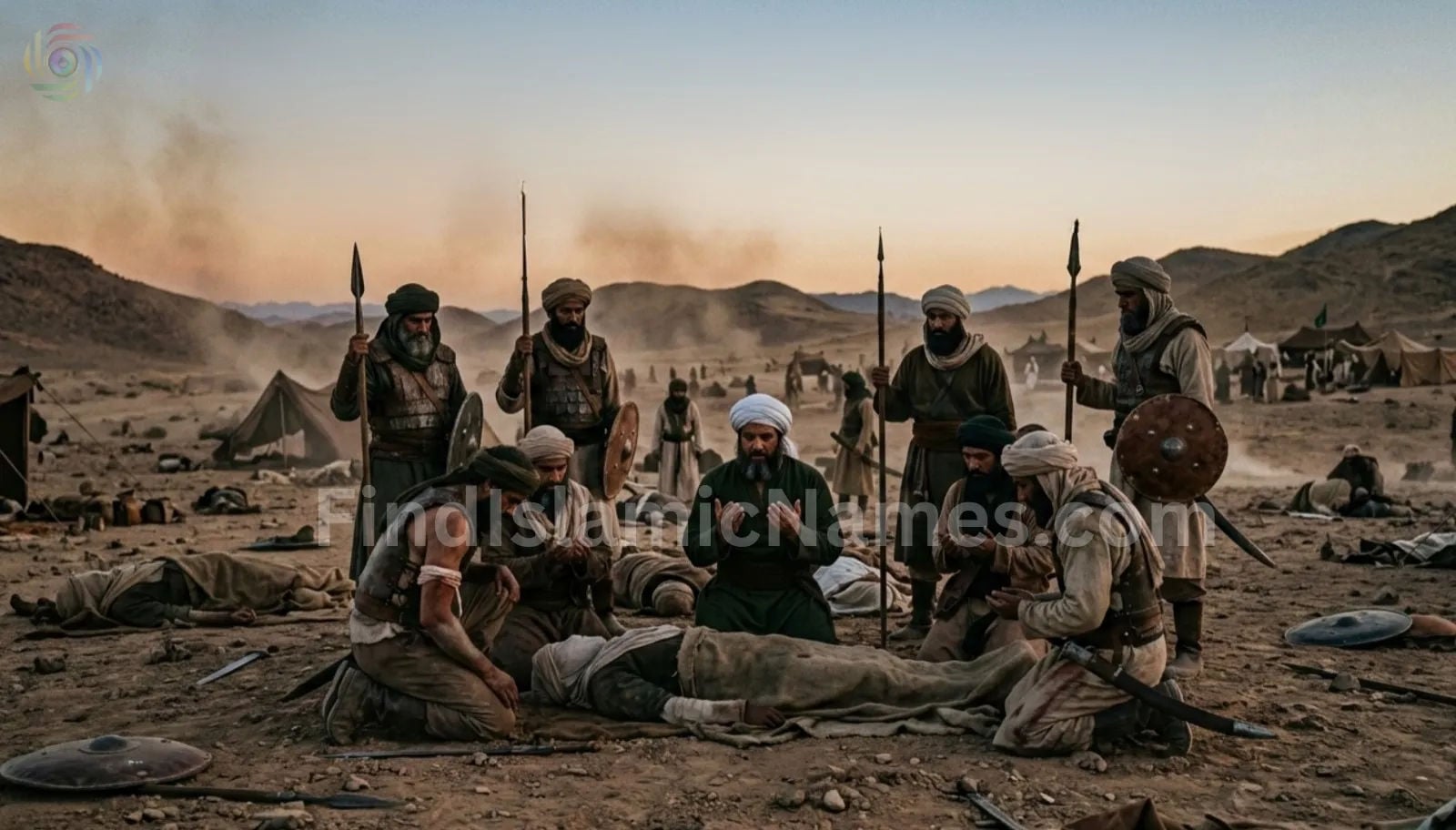
The Battle of Badr is one of the most significant events in early Islamic history. It took place in 624 CE between the Muslims of Madinah and the Quraysh of Makkah. Under the leadership of Prophet Muhammad ﷺ, a small group of around 313 Muslims faced a much larger and better-equipped army.
The companions who participated in this historic battle are known as the Badri Sahaba(Ashab al-Badr). In Islamic tradition, they are honored with a special status because of their faith (īmān), sacrifice, and loyalty during a critical moment in the development of Islam.
For this reason, many Muslims search for Badri Sahaba names with meanings, not just to learn history but also to choose meaningful and respected names for their children.
Historical Note: The Battle of Badr is mentioned in the Holy Quran in Surah Al-Anfal (Chapter 8), where Allah describes it as a "day of distinction" between truth and falsehood.
Who Are the Badri Sahaba?
The term Badri Sahaba refers to the companions of the Prophet ﷺ who took part in the Battle of Badr. According to classical Islamic sources, their number was approximately 313, including both the Muhajirun (those who migrated from Makkah) and the Ansar (the helpers from Madinah).
Despite facing a much larger force, these companions showed extraordinary courage and trust in Allah. Their participation is considered a mark of greatness, and many scholars mention their special virtue in Islamic teachings.
In several narrations, the people of Badr are described as being among the most honored companions because of their early support and sacrifice.
The honored companions who stood beside the Prophet ﷺ
Why Are Badri Sahaba Names Important in Islam?
Badri Sahaba names are not just historical records—they represent real personalities who lived with strong character and faith. Choosing these names is meaningful because:
Parents who search for Islamic names from Sahaba or companions of Badr names often prefer these names because they carry both identity and legacy.
Famous Badri Sahaba and Their Contributions
Abu Bakr as-Siddiq (RA)
The closest companion of the Prophet ﷺ, known for his unwavering support and truthfulness. First Caliph of Islam and father of Aisha (RA).
Umar ibn al-Khattab (RA)
Known for justice, strength, and leadership. Second Caliph of Islam. His conversion to Islam gave strength to the early Muslim community.
Uthman ibn Affan (RA)
Third Caliph of Islam. Known for his modesty, generosity, and compilation of the Quran into a single book format.
Ali ibn Abi Talib (RA)
Fourth Caliph of Islam. Famous for wisdom, bravery, and knowledge. Cousin and son-in-law of the Prophet ﷺ.
Hamza ibn Abdul-Muttalib (RA)
The "Lion of Allah" and uncle of the Prophet ﷺ. A symbol of courage and strength in battle. Martyred at the Battle of Uhud.
Bilal ibn Rabah (RA)
The first Mu'azzin (caller to prayer). Known for his patience, faith, and dedication despite severe persecution in Makkah.
⚔️ Historical Context of the Battle of Badr
The Battle of Badr took place near a well-known area between Makkah and Madinah. At that time, Muslims were facing increasing pressure and hostility from the Quraysh.
Although the Muslims were fewer in number and had limited resources, they remained firm in their belief. The outcome of the battle is remembered as a decisive moment that strengthened the Muslim community.
This event is often described in Islamic history as a turning point that demonstrated how faith, unity, and determination can overcome even the most difficult challenges.

The Battle of Badr is mentioned in Surah Al-Anfal (The Spoils of War)
Lessons We Learn from the Badri Sahaba
The lives of the Badri Sahaba offer valuable lessons that remain relevant today:
Because of these qualities, their names are not only historical—they are inspirational.
👶 Choosing Names from the Badri Sahaba
Many parents prefer names from the companions of Badr because they carry deep meaning and historical value.
- ✓Understand the meaning and background of the name
- ✓Learn about the life of the companion
- ✓Choose a name that is easy to pronounce in your language
- ✓Select a name that reflects positive character traits
Names like these are often chosen with the intention of connecting the child to strong values and a respected legacy.
Important Considerations
- • Always maintain respect for the companions
- • Avoid incorrect spellings or meanings
- • Verify information from reliable sources
- • Understand that these names carry religious significance
Respect and accuracy are very important when dealing with Islamic historical figures.
Related Islamic Name Collections
Frequently Asked Questions About Badri Sahaba
Who are the Badri Sahaba?▼
How many companions were in the Battle of Badr?▼
Why are their names important?▼
Can we name children after Badri Sahaba?▼
Where is the Battle of Badr mentioned in the Quran?▼
Explore More Islamic History Resources
Final Thoughts
The names of the Badri Sahaba are deeply connected to one of the most important moments in Islamic history. They represent courage, faith, and dedication in the face of difficulty.
Choosing a name from among the companions of Badr is not just about selecting a name—it is about honoring a legacy of strength and faith. These names continue to inspire and guide people across generations.
Frequently Asked Questions
QWho are the Badri Sahaba?
Badri Sahaba are the 313 companions of Prophet Muhammad (ﷺ) who participated in the Battle of Badr, the first major battle in Islamic history. They hold a special honored status in Islam and are promised Paradise.
QHow many Badri Sahaba were there?
There were 313 Sahaba who participated in the Battle of Badr. They are all honored and respected for their faith and sacrifice.
QWhat is the significance of Badri Sahaba?
The Badri Sahaba hold a special status in Islam as they fought alongside the Prophet in the first decisive battle against the Quraysh. The Prophet prayed for their forgiveness, and they are promised Paradise.
QWho were the martyrs of Badr?
There were 14 martyrs from the Muslim side in the Battle of Badr, including their leader Haritha bin Suraqa al-Ansari. The Muhajirun (emigrants) had 6 martyrs, and the Ansar (helpers) had 8 martyrs.