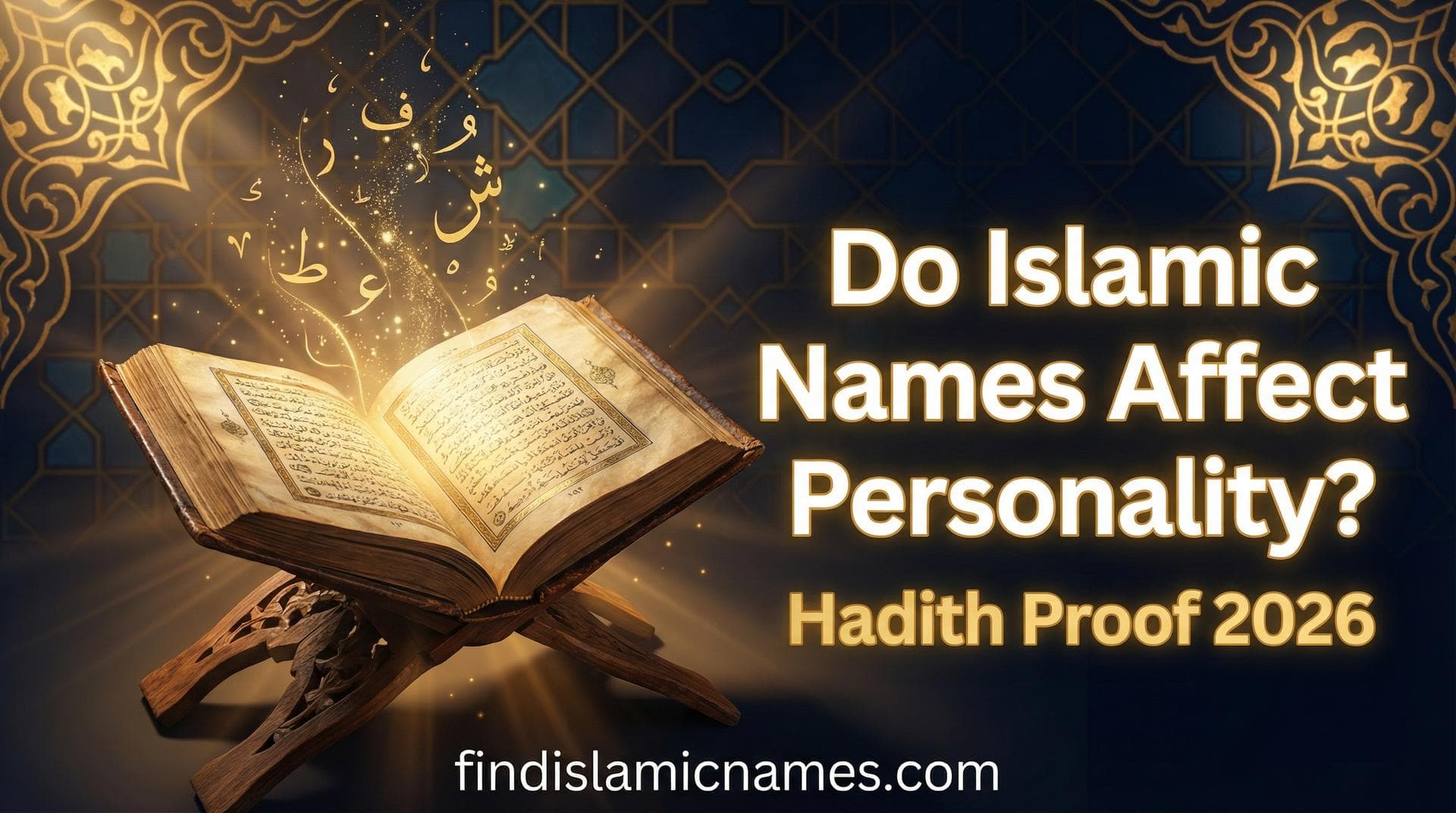
How Islamic Names Affect Personality & Destiny – Authentic Proof from Hadith & Scholars (2026 Guide)
Have you ever wondered why the Prophet ﷺ personally changed people’s names?
Or why a single name could influence generations of a family?
In Islam, choosing a name is not just a cultural tradition — it is an act of worship and a profound dua for your child’s future. The Prophet ﷺ said:
“You will be called by your names and the names of your fathers on the Day of Resurrection, so make your names good.”
— Sunan Abi Dawud 4950 (Sahih)
But there is more. Authentic narrations and the words of great scholars prove that names carry real effects on personality and character — not on Qadr (destiny, which is only in Allah’s Hands), but on the subtle traits, habits, and outlook a person develops.
1. The Famous Hadith of Hazn → Sahl (The Strongest Proof)
One of the clearest examples comes directly from the Prophet ﷺ himself.
Narrated by Sa`id ibn al-Musayyab (رحمه الله):
His grandfather visited the Prophet ﷺ. The Prophet ﷺ asked, “What is your name?”
He replied, “Hazn” (which means harsh, rough, or difficult).
The Prophet ﷺ said, “You are Sahl” (which means easy-going and gentle).
The man replied, “I will not change the name my father gave me.”
Sa`id ibn al-Musayyab later said:
“We have had roughness (in character) ever since.”
— Sahih al-Bukhari 6193 & Al-Adab Al-Mufrad 841
This Hadith is recorded in the most authentic books of Hadith and is used by scholars as direct evidence that names leave a mark on personality.
2. What Did the Scholars Say?
Ibn al-Qayyim رحمه الله (one of the greatest scholars of the Ummah) explained it beautifully in his book Tuhfat al-Mawdud bi Ahkam al-Mawlood:
“If you want to see the effect of a person’s name on his personality, ponder the Hadith of Sa`id ibn al-Musayyab about his grandfather named Hazn…
Names have meanings, and these meanings will inevitably have an effect on the person who carries the name.”
He further stated that beautiful names bring ease and barakah, while harsh or negative names can bring corresponding traits — just as the Prophet ﷺ loved good omens and pleasant words.
Other major scholars such as Ibn Battal, Al-Nawawi, and Ibn Qudamah also encouraged changing names with ugly or negative meanings (e.g., Harb = war, Murrah = bitter, Aasiyah = sinner) because of this effect.
3. Names the Prophet ﷺ Personally Changed
The Prophet ﷺ changed several names during his lifetime for this exact reason:
Harb (war) → Silm (peace)
Aasiyah (sinner) → Jamila (beautiful)
Zahm (crowded/restrictive) → Bashir (bringer of good news)
He also loved names like Abdullah and Abdur Rahman, calling them the most beloved to Allah (Sahih Muslim).
4. Practical Lessons for Parents in 2026
Names do not control destiny — only Allah does. But they do influence the environment in which a child grows, the way people perceive them, and the subconscious traits they may develop.
Positive names inspire good character.
Negative names can create unnecessary hurdles in character development.
Actionable Tips for Choosing Names:
Choose names with beautiful meanings (e.g., from the Sahaba, Prophet’s family, or Asma ul Husna).
Avoid names with harsh, negative, or idolatrous meanings.
Follow the Sunnah: Make dua at the time of naming and announce the name on the 7th day with Aqiqah.
Consider family unity — coordinated Sahabi names create shared inspiration (see our Family Name Plans blog).
To go deeper into the Sunnah of naming children and raising them with strong Islamic character, enroll in our structured parenting and Seerah courses at Divine Quran Center. Expert teachers will guide you step-by-step.
Final Reminder
The Prophet ﷺ said: “A good name is part of a child’s rights over his father.”
May Allah grant every Muslim parent the ability to choose blessed names that become a source of barakah and good character for their children. Ameen!