Why Tajweed is Important: Complete Guide to Reciting the Quran Correctly
The Quran is not just a book — it is the living speech of Allah. Every letter, every sound, and every pause carries divine wisdom. Yet many of us recite it daily without realising that even a small mistake in pronunciation can change its meaning.
This is where Tajweed comes in.
In this complete guide, you will discover:
What Tajweed really means
Why it is essential (not optional)
What happens when we recite without it
What the greatest scholars said
A clear, step-by-step roadmap to start learning Tajweed today
Whether you are a beginner or someone who has been reciting for years, this article will answer every question you have about Tajweed and leave you motivated to recite the Quran the way it deserves to be recited.
1. What is Tajweed? (Simple Definition)
The word Tajweed (تجويد) comes from the Arabic root “j-w-d”, which means to make something excellent, to beautify, or to improve.
In Islamic terminology, Tajweed is the set of rules that govern the correct pronunciation of every letter in the Quran — giving each letter its full right in terms of:
Articulation point (Makhraj)
Letter qualities (Sifaat)
Rules of merging, hiding, lengthening, and stopping
Tajweed ensures we recite the Quran exactly as it was revealed to Prophet Muhammad ﷺ through Angel Jibreel.
2. The Quranic and Historical Basis of Tajweed
Allah Himself commanded us in the Quran:
“And recite the Quran with measured recitation (tartīl).”
— Surah Al-Muzzammil 73:4
Scholars explain that “tartīl” means reciting slowly, clearly, and according to the rules of Tajweed.
The Prophet ﷺ said:
“Beautify the Quran with your voices.”
— Sunan Abu Dawud 1468 (Sahih)
He also taught the Companions the precise pronunciation, and they passed it down generation after generation.
3. Why Tajweed is Necessary – The Real Reasons
Tajweed is not about sounding “nice”. It is about preserving the Quran exactly as Allah revealed it.
Here’s why it matters:
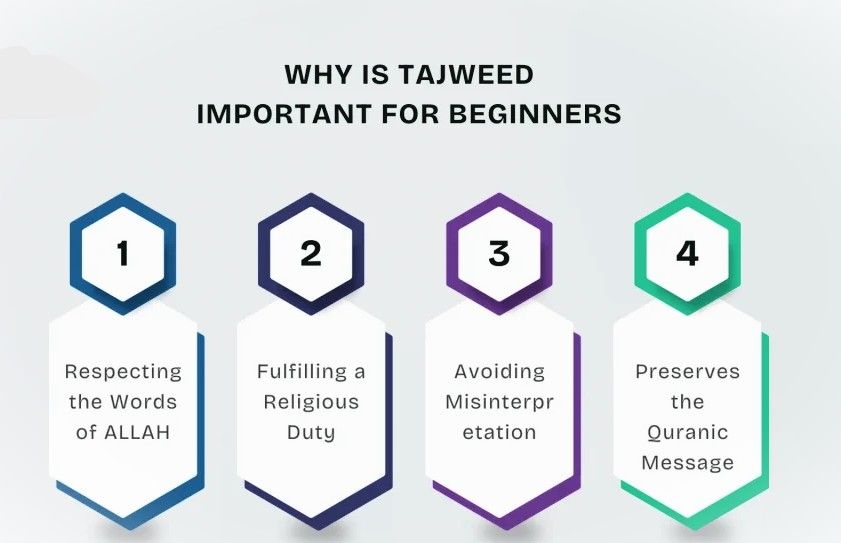
It protects the meaning of the Quran
It shows respect to the Words of Allah
It brings greater reward — the Prophet ﷺ said the one who recites beautifully is with the noble scribes (angels)
It is an obligation according to many scholars (more on this below)
4. What Happens If We Recite Without Proper Tajweed?
This is the part most people don’t realise — and it can be serious.
Without Tajweed, even small mistakes can completely change the meaning of a verse.
Real Examples:
Wrong Pronunciation | Correct Pronunciation | Meaning Change Example |
|---|---|---|
“Kalb” (كَلْب) | “Qalb” (قَلْب) | Dog → Heart (huge difference in Surah Al-Fajr) |
“Al-Hamdu” | “Al-Hamd” | Can invalidate Salah in Al-Fatiha |
Wrong elongation or merging | Correct rules | Changes command into statement or vice versa |
Scholars say that if the mistake changes the meaning and the reciter knows better but doesn’t fix it, the recitation is not accepted and may even be sinful.
5. What Do the Scholars Say About Tajweed?
The greatest Tajweed scholar, Imam Muhammad ibn al-Jazari (رحمه الله), wrote in his famous poem Al-Jazariyyah:
“Applying Tajweed is an issue of absolute necessity,
Whoever does not apply Tajweed to the Quran, then a sinner is he.”
Most classical scholars agree:
Learning basic Tajweed (to avoid major mistakes that change meaning) is Fard ‘Ayn (individual obligation) for every Muslim who recites the Quran.
Perfecting all rules is Fard Kifayah (communal obligation).
6. Beautiful Benefits of Learning Tajweed
Your heart feels more connected during recitation
You feel the miraculous beauty of the Quran
Greater reward and peace in this life and the next
Protection from making mistakes that could alter Allah’s words
Confidence when leading prayer or teaching others
7. Your Step-by-Step Roadmap to Master Tajweed in 2026
Here is a clear, practical plan anyone can follow:
Step 1: Learn the Arabic Alphabet & Makharij (2–4 weeks)
Step 2: Master the 10 Major Qualities of Letters
Step 3: Learn the Core Rules (Idgham, Ikhfa, Iqlab, Izhar, etc.)
Step 4: Practice with a Qualified Teacher (highly recommended)
Step 5: Recite Daily with Tajweed and Record Yourself
Step 6: Join a Structured Course for accountability and correction
Pro Tip: Start with just 10 minutes a day. Consistency beats perfection.
Final Words
Tajweed is not difficult — it is a beautiful gift from Allah that allows us to honour His Book the way it deserves.
The question is not “Can I learn Tajweed?”
The real question is: “Will I give the Quran the respect it deserves?”
Start today. Even one rule at a time. Your recitation will become more beautiful, your connection with Allah will deepen, and your reward will be multiplied.

May Allah make us among those who recite the Quran correctly, with love, and with sincerity. Ameen.