Badri Sahaba Names Collection
Discover the 313 brave companions of Prophet Muhammad (ﷺ) who participated in the Battle of Badr. These honored individuals hold a special status in Islamic history and are promised Paradise.Badri Sahaba names are not just historical records—they represent real personalities who lived with strong character and faith.
Download the complete list of all 313 Badri Sahaba names in PDF format.
Showing 13 of 313 Badri Sahaba
Shurahbil ibn al-Simr
شرحبيل بن السمط
Qa'id Muslim (Muslim Commander)
Shurahbil means 'lion of God'. He was a companion from the south who accepted Islam and participated in the early Islamic conquests in Syria. He was a commander of certain campaigns.
Yarfa ibn Salama
يرفأ بن سلامة
Khadim Umar ibn al-Khattab (Servant of Caliph Umar)
Yarfa means 'he who elevates'. He was a servant and close aide of Umar ibn al-Khattab who carried out the Caliph's orders and was present during many key events of Umar's caliphate.
Abd al-Rahman ibn Abi Bakr
Note: See id 55
Ibn al-Siddiq
See entry 55
Ibn al-Zubayr variant
Note: See id 57 — Abdullah ibn Zubayr
Awwal Mawlud fil Hijra
See entry 57
Umayr ibn Sad variant
Note: See id 133 or 185
Wali al-Zuhd
See entries 133 and 185
Aslam Mawla Umar
أسلم مولى عمر
Mawla Umar ibn al-Khattab (Freed Slave of Caliph Umar)
Aslam means 'who submits'. He was the freed slave and close aide of Umar ibn al-Khattab who accompanied the Caliph everywhere and narrated the famous account of Umar going secretly at night to help the poor.
Nuaym ibn Abdullah al-Nahham
نعيم بن عبدالله النحام
Al-Nahham (The Sigher/Sounder), Sahib Najwa al-Nabi (Mentioned by Prophet through revelation)
Nuaym means 'bliss'. He was one of the early converts whose Islam the Prophet kept secret at the request of his tribe. He was called al-Nahham because his sighing in prayer was heard by the Prophet from paradise.
Fukayhah bint Yassar
فكيهة بنت يسار
Sahabiyya (Female Companion of the Muhajirin)
Fukayhah means 'cheerful woman', 'joyful'. She was a female companion from Makkah who accepted Islam early and is mentioned in the biographical books of companions.
Anas ibn Malik al-Ka'bi
أنس بن مالك الكعبي
Sahib Hadith al-Safar (Companion of the Journey Shortening Hadith)
Anas means 'companionship'. He was a companion distinct from Anas ibn Malik the servant. He narrated a specific hadith about shortening prayer while traveling during harvest season.
Khalid ibn Said ibn al-As variant
Note: See id 109
Min Awwaliyyin
See entry 109
Umar ibn Sad (not ibn al-Khattab)
عمر بن سعد
Ibn Faris al-Islam (Son of the Knight of Islam)
Umar means 'life'. He was the son of Sa'd ibn Abi Waqqas. He was controversially the commander of the forces at Karbala who fought against Husayn ibn Ali. His status as a companion's son is noted but his actions at Karbala are condemned by scholars.
Sharik ibn Anas
شريك بن أنس
Sahabi
Sharik means 'partner'. A companion referenced in biographical literature. Details are preserved in the classical Islamic biographical works on companions.
Ata ibn Abi Rabah
عطاء بن أبي رباح
Mufti Makkah (Grand Mufti of Makkah), Sayyid al-Tabi'in (Chief of the Successors)
Ata means 'gift'. He was a great Tabi'i scholar who met many companions. He served as the grand mufti of Makkah and was known as the greatest scholar of his era. He was the student of Ibn Abbas.
Badri Sahaba Names – Companions of the Battle of Badr
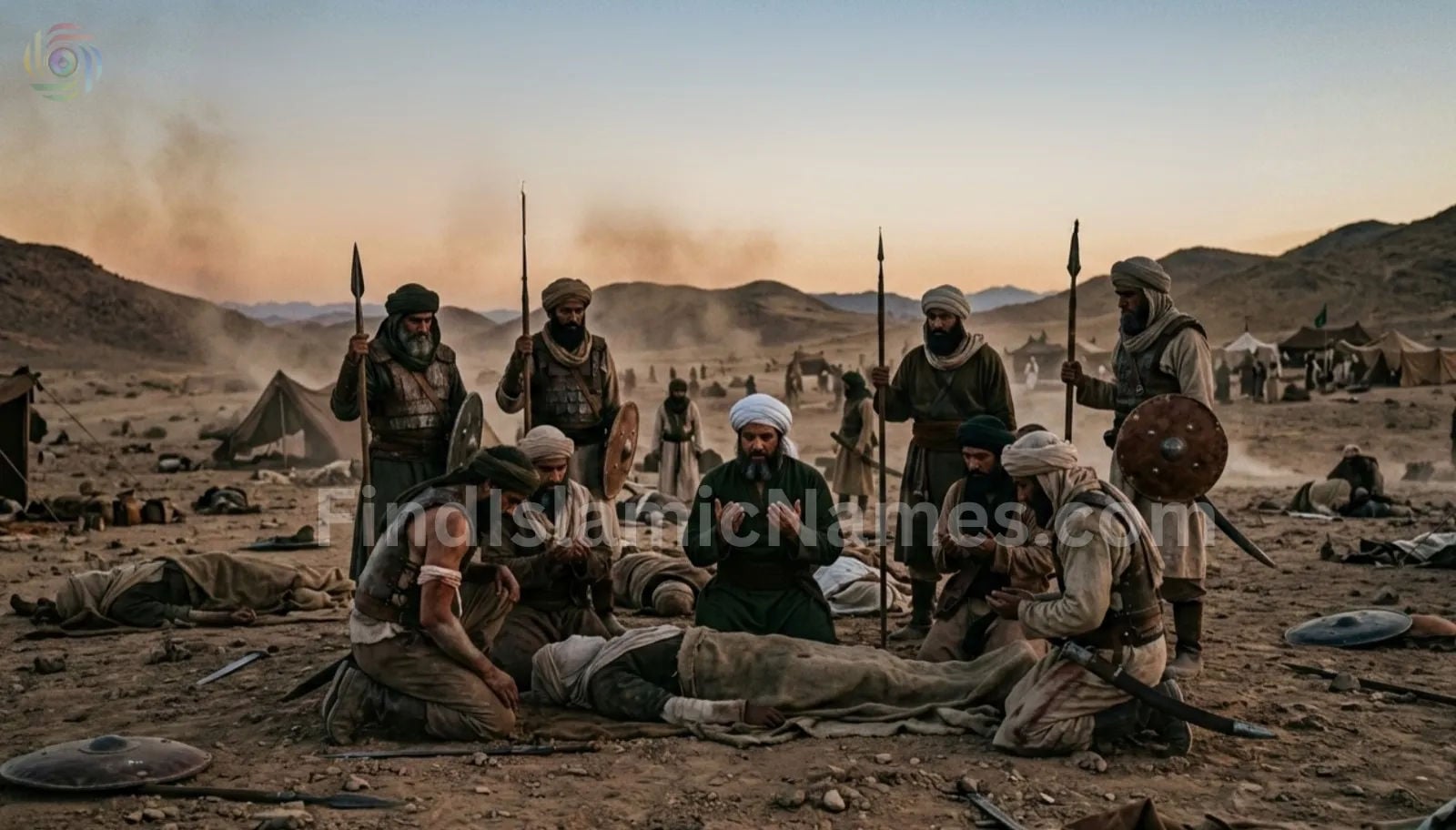
The Battle of Badr is one of the most significant events in early Islamic history. It took place in 624 CE between the Muslims of Madinah and the Quraysh of Makkah. Under the leadership of Prophet Muhammad ﷺ, a small group of around 313 Muslims faced a much larger and better-equipped army.
The companions who participated in this historic battle are known as the Badri Sahaba(Ashab al-Badr). In Islamic tradition, they are honored with a special status because of their faith (īmān), sacrifice, and loyalty during a critical moment in the development of Islam.
For this reason, many Muslims search for Badri Sahaba names with meanings, not just to learn history but also to choose meaningful and respected names for their children.
Historical Note: The Battle of Badr is mentioned in the Holy Quran in Surah Al-Anfal (Chapter 8), where Allah describes it as a "day of distinction" between truth and falsehood.
Who Are the Badri Sahaba?
The term Badri Sahaba refers to the companions of the Prophet ﷺ who took part in the Battle of Badr. According to classical Islamic sources, their number was approximately 313, including both the Muhajirun (those who migrated from Makkah) and the Ansar (the helpers from Madinah).
Despite facing a much larger force, these companions showed extraordinary courage and trust in Allah. Their participation is considered a mark of greatness, and many scholars mention their special virtue in Islamic teachings.
In several narrations, the people of Badr are described as being among the most honored companions because of their early support and sacrifice.
The honored companions who stood beside the Prophet ﷺ
Why Are Badri Sahaba Names Important in Islam?
Badri Sahaba names are not just historical records—they represent real personalities who lived with strong character and faith. Choosing these names is meaningful because:
Parents who search for Islamic names from Sahaba or companions of Badr names often prefer these names because they carry both identity and legacy.
Famous Badri Sahaba and Their Contributions
Abu Bakr as-Siddiq (RA)
The closest companion of the Prophet ﷺ, known for his unwavering support and truthfulness. First Caliph of Islam and father of Aisha (RA).
Umar ibn al-Khattab (RA)
Known for justice, strength, and leadership. Second Caliph of Islam. His conversion to Islam gave strength to the early Muslim community.
Uthman ibn Affan (RA)
Third Caliph of Islam. Known for his modesty, generosity, and compilation of the Quran into a single book format.
Ali ibn Abi Talib (RA)
Fourth Caliph of Islam. Famous for wisdom, bravery, and knowledge. Cousin and son-in-law of the Prophet ﷺ.
Hamza ibn Abdul-Muttalib (RA)
The "Lion of Allah" and uncle of the Prophet ﷺ. A symbol of courage and strength in battle. Martyred at the Battle of Uhud.
Bilal ibn Rabah (RA)
The first Mu'azzin (caller to prayer). Known for his patience, faith, and dedication despite severe persecution in Makkah.
⚔️ Historical Context of the Battle of Badr
The Battle of Badr took place near a well-known area between Makkah and Madinah. At that time, Muslims were facing increasing pressure and hostility from the Quraysh.
Although the Muslims were fewer in number and had limited resources, they remained firm in their belief. The outcome of the battle is remembered as a decisive moment that strengthened the Muslim community.
This event is often described in Islamic history as a turning point that demonstrated how faith, unity, and determination can overcome even the most difficult challenges.

The Battle of Badr is mentioned in Surah Al-Anfal (The Spoils of War)
Lessons We Learn from the Badri Sahaba
The lives of the Badri Sahaba offer valuable lessons that remain relevant today:
Because of these qualities, their names are not only historical—they are inspirational.
👶 Choosing Names from the Badri Sahaba
Many parents prefer names from the companions of Badr because they carry deep meaning and historical value.
- ✓Understand the meaning and background of the name
- ✓Learn about the life of the companion
- ✓Choose a name that is easy to pronounce in your language
- ✓Select a name that reflects positive character traits
Names like these are often chosen with the intention of connecting the child to strong values and a respected legacy.
Important Considerations
- • Always maintain respect for the companions
- • Avoid incorrect spellings or meanings
- • Verify information from reliable sources
- • Understand that these names carry religious significance
Respect and accuracy are very important when dealing with Islamic historical figures.
Related Islamic Name Collections
Frequently Asked Questions About Badri Sahaba
Who are the Badri Sahaba?▼
How many companions were in the Battle of Badr?▼
Why are their names important?▼
Can we name children after Badri Sahaba?▼
Where is the Battle of Badr mentioned in the Quran?▼
Explore More Islamic History Resources
Final Thoughts
The names of the Badri Sahaba are deeply connected to one of the most important moments in Islamic history. They represent courage, faith, and dedication in the face of difficulty.
Choosing a name from among the companions of Badr is not just about selecting a name—it is about honoring a legacy of strength and faith. These names continue to inspire and guide people across generations.
Frequently Asked Questions
QWho are the Badri Sahaba?
Badri Sahaba are the 313 companions of Prophet Muhammad (ﷺ) who participated in the Battle of Badr, the first major battle in Islamic history. They hold a special honored status in Islam and are promised Paradise.
QHow many Badri Sahaba were there?
There were 313 Sahaba who participated in the Battle of Badr. They are all honored and respected for their faith and sacrifice.
QWhat is the significance of Badri Sahaba?
The Badri Sahaba hold a special status in Islam as they fought alongside the Prophet in the first decisive battle against the Quraysh. The Prophet prayed for their forgiveness, and they are promised Paradise.
QWho were the martyrs of Badr?
There were 14 martyrs from the Muslim side in the Battle of Badr, including their leader Haritha bin Suraqa al-Ansari. The Muhajirun (emigrants) had 6 martyrs, and the Ansar (helpers) had 8 martyrs.