Badri Sahaba Names Collection
Discover the 313 brave companions of Prophet Muhammad (ﷺ) who participated in the Battle of Badr. These honored individuals hold a special status in Islamic history and are promised Paradise.Badri Sahaba names are not just historical records—they represent real personalities who lived with strong character and faith.
Download the complete list of all 313 Badri Sahaba names in PDF format.
Showing 50 of 313 Badri Sahaba
Abdullah ibn Umar
عبدالله بن عمر
Al-Abid al-Warih (The Devoted Worshipper), Hafiz al-Sunnah
Abdullah means 'servant of Allah'. He was the son of Umar ibn al-Khattab and one of the most prolific hadith narrators. He was extremely devoted to following the Sunnah in every detail and was known for his scrupulous piety.
Nafi ibn Abd al-Harith
نافع بن عبد الحارث
Wali Makkah (Governor of Makkah)
Nafi means 'beneficial'. He was a companion who served as the governor of Makkah under Umar ibn al-Khattab and was known for his administrative skills.
Abu Musa al-Ashari variant
Note: See id 28
Al-Ash'ari
See entry 28
Usamah ibn Zayd variant
Note: See id 25
Hibb ibn Hibb
See entry 25
Sahl ibn Bayda
سهل بن بيضاء
Awwal Man Sulliya Alayhi fil Masjid (One of the First for whom Funeral Prayer was Held in the Mosque)
Sahl means 'easy'. He was an early companion and emigrant. The Prophet prayed the funeral prayer for him inside the mosque — one of only two companions for whom this was done.
Burayda ibn al-Husayb
بريدة بن الحصيب
Sahib Liwa al-Nabi (Holder of the Prophet's Banner at some expeditions)
Burayda means 'cold' or 'little cold one'. He was a chief who met the Prophet during the Hijra and accepted Islam immediately. He participated in many battles and settled in Khurasan.
Abdurrahman ibn Abi Layla
عبدالرحمن بن أبي ليلى
Al-Ansari
Abd al-Rahman means 'servant of the Most Merciful'. He was a companion and Tabi'i scholar who reported hadiths from Ali and many other companions. He was martyred at the Battle of the Nahrawan.
Qays ibn Sad ibn Ubada
Note: See id 96
Al-Qaid al-Mahir
See entry 96
Safwan ibn al-Muattal
صفوان بن المعطل
Al-Mubarra (The Exonerated), Sahib Hadith al-Ifk
Safwan means 'pure rock'. He was the companion falsely accused in the incident of the Ifk (Slander), when Aisha was left behind during a journey and he escorted her back. Allah revealed his and Aisha's innocence in the Quran.
Umayr ibn Abi Waqqas
عمير بن أبي وقاص
Asgharu Shahid Badr (Youngest Martyr of Badr)
Umayr means 'long-lived'. He was the younger brother of Sa'd ibn Abi Waqqas. He was so young at Badr that he hid for fear of being turned away. He was martyred at Badr, becoming one of the youngest martyrs.
Marthad ibn Abi Marthad
مرثد بن أبي مرثد
Shahid al-Raji (Martyr of the Raji Incident)
Marthad means 'strong place' or 'fortress'. He was a companion who participated in military missions. He was among the group sent to teach Quran but was treacherously martyred at al-Raji' incident.
Khalid ibn Bukayr
خالد بن البكير
Min Awwal al-Muslimeen (Among the First Muslims)
Khalid means 'immortal'. He was an early companion from Banu Sad and among the earliest converts. He participated in battles and was among the companions who migrated to Abyssinia.
Iyas ibn al-Bukayr
إياس بن البكير
Shahid Badr (Participant at Badr)
Iyas means 'consolation'. He was an early Muslim who participated in the first migration to Abyssinia and later in Badr. He was a brother of Khalid ibn Bukayr.
Waqid ibn Abdullah al-Tamimi
واقد بن عبدالله التميمي
Awwal Qatil fil Islam (First Person to Kill in Battle for Islam)
Waqid means 'the burning one', 'igniter'. He was the companion who made the first kill in Islamic history during the first military expedition — the Sariyyah of Abdullah ibn Jahsh.
Sa'd ibn Abi Sarh
سعد بن أبي سرح
Al-Ansari
Sa'd means 'happiness'. He was the brother of Abdullah ibn Abi al-Sarh. He was among the Ansar who participated in battles during the Prophet's time.
Julhas ibn Amr
جلهاس بن عمرو
Sahabi
A companion who participated in battles during the early Islamic period. Recorded in biographical dictionaries of companions.
Sa'ib ibn Abi Lubaba
سائب بن أبي لبابة
Ibn Abu Lubaba
Sa'ib means 'the one who goes away', 'traveler'. He was the son of Abu Lubaba and a companion. He participated in Islamic campaigns and narrated hadiths.
Abd al-Rahman ibn Auf al-Asghar
عبدالرحمن بن عوف الأصغر
Sahabi
A companion distinct from the famous Abd al-Rahman ibn Awf of the Ten Promised Paradise. Biographical dictionaries of companions record his name.
Hind bint al-Muttalib
هند بنت المطلب
Sahabiyya
Hind means 'group of camels' or 'India'. She was the daughter of al-Muttalib ibn Abd Manaf and a relative of the Prophet. She accepted Islam and was among the female companions.
Habib ibn Zayd al-Ansari
حبيب بن زيد الأنصاري
Shahid Musaylima (Martyr who died at the hands of Musaylima)
Habib means 'beloved'. He was the son of Zayd ibn Asim. He was sent as a messenger to Musaylima al-Kadhdhab, who mutilated him piece by piece asking if Muhammad was the Prophet — each time Habib affirmed it until he died.
Muadh ibn Jabal variant
Note: See id 29
Imam al-Ulama
See entry 29
Qays ibn Ubbad
قيس بن عباد
Al-Tabi'i al-Jalil (Great Successor, associate of companions)
Qays means 'firm'. He was a Tabi'i who met many companions including Ali ibn Abi Talib. He narrated hadiths and was known for his deep religious knowledge.
Hind bint Abi Halah
هند بنت أبي هالة
Wasifat al-Nabi (Describer of the Prophet's Appearance)
Hind was the daughter of Khadijah's first husband, thus a stepchild of the Prophet. She is known for her detailed description of the Prophet's physical appearance, preserved in hadith collections.
Umm al-Fadl bint al-Harith
Note: Same as id 163 — Umm al-Fadl Lubaba bint al-Harith
Thani Man Aslamat
See entry 163
Subay'a bint al-Harith al-Aslamiyya
سبيعة بنت الحارث الأسلمية
Sahiba Ayat al-Iddah (Companion in whose case Iddah verse was revealed)
Subay'a means 'little lioness'. She is the companion about whom Allah revealed the ruling on the waiting period (iddah) of a widow — that it ends upon delivery of the child even if the husband's four-month period hasn't elapsed.
Huzayl ibn Shurahbil
هزيل بن شراحيل
Sahib Ibn Masud (Disciple of Ibn Masud)
Huzayl means 'weakened by illness' or 'the slender one'. He was a companion from the Kufan region known for his narrations of hadith. He was a student of Ibn Masud.
Mulayka bint Abi Umayya
مليكة بنت أبي أمية
Sahabiyya
Mulayka is a diminutive of 'Malika' meaning 'queen'. She was a female companion known for narrating hadiths about the Prophet.
Fatimah bint Qays
فاطمة بنت قيس
Sahiba Hadith al-Talaq (Companion of the Divorce Hadith)
Fatimah means 'abstainer from wrong'. She was the sister of al-Dahhak ibn Qays. She was among the first female immigrants and is known for the famous hadith about housing and maintenance of divorced women.
Zaynab bint Abi Muawiyah
زينب بنت أبي معاوية
Zawjat Ibn Masud (Wife of Ibn Masud), Al-Karimah (The Generous)
Zaynab means 'fragrant tree'. She was the wife of Abdullah ibn Masud. Known for her charitable activities, she sought the Prophet's guidance on whether giving charity to her husband and orphans in her care would qualify as sadaqah.
Rumaythah bint Amr
رميثة بنت عمرو
Sahabiyya al-Ansariyya
Rumaythah means 'little arrow'. She was a female companion from the Ansar who accepted Islam and pledged allegiance to the Prophet.
Umm Ayman bint Thalaba
أم أيمن بنت ثعلبة
Sahabiyya
A companion from the Ansar distinct from Barakah Umm Ayman. She was among the women who pledged allegiance to the Prophet.
Duba'a bint al-Zubayr
ضباعة بنت الزبير
Sahiba Hadith al-Ihram al-Mushtarit (Companion of Conditional Ihram Hadith)
Duba'a means 'hyena'. She was the cousin of the Prophet and wife of al-Miqdad ibn al-Aswad. She is known for the hadith about conditional ihram (hajj) for those who are ill.
Fatimah bint Asad
فاطمة بنت أسد
Umm Ali, Umm al-Nabi bil Tarbiya (Foster-mother of the Prophet by Upbringing)
Fatimah means 'abstainer from wrong'. She was the mother of Ali ibn Abi Talib and a mother figure to the Prophet after his own mother's death. The Prophet shrouded her in his own shirt and lay in her grave briefly.
Uthman ibn Hunaif
عثمان بن حنيف
Wali al-Basra (Governor of Basra)
Uthman means 'baby bustard'. He was a companion who served as governor of Basra under Ali ibn Abi Talib. He is known for the hadith about the blind man whom the Prophet taught a specific supplication for his sight to return.
Aws ibn Samit
Note: See id 123
Sahib Ayat al-Zihar
See entry 123
Mulayk ibn Sinaan
مليك بن سنان
Al-Ansari
Mulayk means 'little king'. He was an Ansari companion who participated in battles and whose descendants narrated hadiths.
Ma'n ibn Adi al-Balawi
معن بن عدي البلوي
Shahid Yamama (Martyr of Yamama)
Ma'n means 'water source' or 'assistance'. He was a companion who participated in Badr and other major battles. He was martyred at the Battle of Yamama.
Utba ibn Masud
عتبة بن مسعود
Akh Ibn Masud (Brother of Ibn Masud)
Utba means 'threshold'. He was the brother of Abdullah ibn Masud. He emigrated to Abyssinia and participated in battles. He narrated hadiths and was known for his religious knowledge.
Ammar ibn Yasir variant
Note: See id 19
Ibn al-Shuhada
See entry 19
Abu Rafi (Ibrahim ibn Abd al-Muttalib)
أبو رافع إبراهيم
Mawla Rasulillah (Freed Slave of the Prophet)
His real name was Aslam or Ibrahim. He was a freed slave of the Prophet who served him closely. He was sent to execute Abu Rafi ibn Abi al-Huqayq (an enemy of Islam), and his narrations include personal moments with the Prophet.
Mariya al-Qibtiyya
مارية القبطية
Umm Ibrahim (Mother of Ibrahim, the Prophet's son)
Mariya means 'white' or 'shining'. She was a Coptic Egyptian woman gifted to the Prophet by the Muqawqis of Egypt. She was the mother of Ibrahim, the Prophet's son. She was considered a concubine who attained a high spiritual status.
Abu Barza al-Aslami
أبو برزة الأسلمي
Sahib Hadith al-Hisab (Companion of the Accountability Hadith)
His real name was Nadla ibn Ubayd or Fadala. He was a companion who participated in many battles and is known for the hadith about accountability on the Day of Judgment — that a servant will not move from his place until asked about five things.
Samura ibn Jundab
سمرة بن جندب
Wali al-Basra (Governor of Basra)
Samura means 'acacia tree', 'brown complexion'. He was a companion known for narrating many hadiths including those about dreams and Islamic rulings. He later served as governor of Basra.
Wabisa ibn Ma'bad
وابصة بن معبد
Sahib Hadith al-Ithm wal Birr (Companion of the Sin and Righteousness Hadith)
Wabisa means 'the one who glistens' or 'spotted'. He was a companion known for the profound hadith about consulting one's heart for sincerity — the Prophet told him to ask his own soul for a fatwa.
Abu Barqan
أبو برقان
Sahabi
A companion known through hadith narrations recorded in Islamic biographical literature.
Nu'man ibn Bashir
النعمان بن بشير
Awwal Mawlud lil Ansar ba'd Hijra (First Child Born to the Ansar after Hijra), Wali Kufa
Nu'man means 'blood', 'grace'. He was the first child born among the Ansar after the Hijra. He narrated the famous hadith: 'Halal is clear and Haram is clear, and between them are doubtful matters.' He served as governor of Kufa and Homs.
Rafi ibn Mualla
رافع بن المعلى
Shahid Badr (Martyr of Badr)
Rafi means 'elevated'. He was an Ansari companion who was martyred at the Battle of Badr, among the first martyrs in that decisive battle.
Akasha ibn Mihsan
عكاشة بن محصن
Min Sab'een Alf Yadkhuluna al-Janna bila Hisab (Among 70,000 who Enter Paradise without Reckoning)
Ukasha means 'spider web'. He was a brave companion who broke his sword in battle and the Prophet gave him a branch which miraculously became a sword. He was among the 70,000 who will enter paradise without reckoning according to the famous hadith.
Numaylah ibn Abdullah
نميلة بن عبدالله
Sahabi
Numaylah means 'little ant'. He was a companion who participated in early Islamic battles and narrated hadiths.
Kab ibn Amr Abu al-Yasar
Note: See id 125 — Abu al-Yasar Ka'b ibn Amr
Asir Abbas (Captor of Abbas)
See entry 125
Badri Sahaba Names – Companions of the Battle of Badr
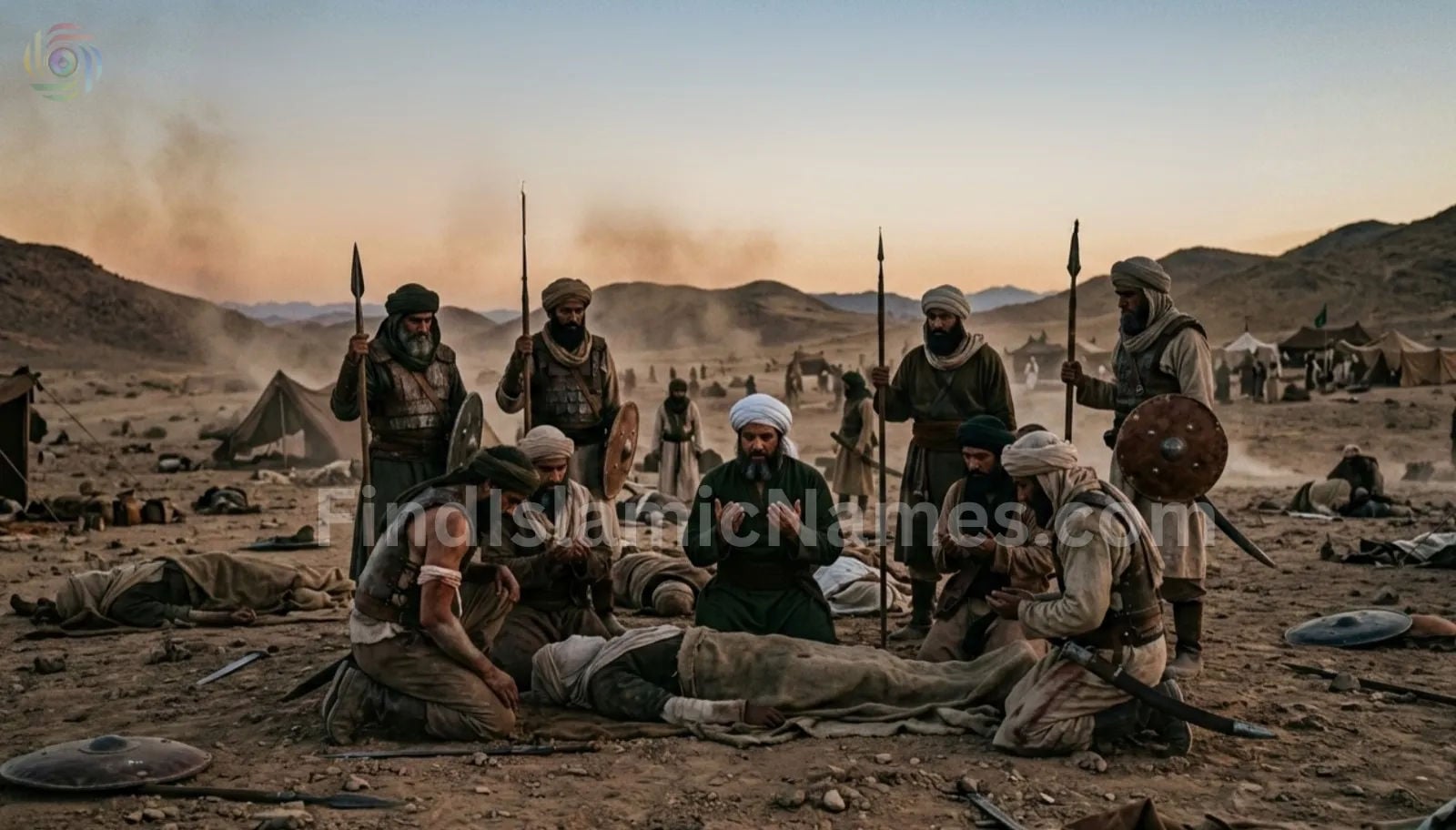
The Battle of Badr is one of the most significant events in early Islamic history. It took place in 624 CE between the Muslims of Madinah and the Quraysh of Makkah. Under the leadership of Prophet Muhammad ﷺ, a small group of around 313 Muslims faced a much larger and better-equipped army.
The companions who participated in this historic battle are known as the Badri Sahaba(Ashab al-Badr). In Islamic tradition, they are honored with a special status because of their faith (īmān), sacrifice, and loyalty during a critical moment in the development of Islam.
For this reason, many Muslims search for Badri Sahaba names with meanings, not just to learn history but also to choose meaningful and respected names for their children.
Historical Note: The Battle of Badr is mentioned in the Holy Quran in Surah Al-Anfal (Chapter 8), where Allah describes it as a "day of distinction" between truth and falsehood.
Who Are the Badri Sahaba?
The term Badri Sahaba refers to the companions of the Prophet ﷺ who took part in the Battle of Badr. According to classical Islamic sources, their number was approximately 313, including both the Muhajirun (those who migrated from Makkah) and the Ansar (the helpers from Madinah).
Despite facing a much larger force, these companions showed extraordinary courage and trust in Allah. Their participation is considered a mark of greatness, and many scholars mention their special virtue in Islamic teachings.
In several narrations, the people of Badr are described as being among the most honored companions because of their early support and sacrifice.
The honored companions who stood beside the Prophet ﷺ
Why Are Badri Sahaba Names Important in Islam?
Badri Sahaba names are not just historical records—they represent real personalities who lived with strong character and faith. Choosing these names is meaningful because:
Parents who search for Islamic names from Sahaba or companions of Badr names often prefer these names because they carry both identity and legacy.
Famous Badri Sahaba and Their Contributions
Abu Bakr as-Siddiq (RA)
The closest companion of the Prophet ﷺ, known for his unwavering support and truthfulness. First Caliph of Islam and father of Aisha (RA).
Umar ibn al-Khattab (RA)
Known for justice, strength, and leadership. Second Caliph of Islam. His conversion to Islam gave strength to the early Muslim community.
Uthman ibn Affan (RA)
Third Caliph of Islam. Known for his modesty, generosity, and compilation of the Quran into a single book format.
Ali ibn Abi Talib (RA)
Fourth Caliph of Islam. Famous for wisdom, bravery, and knowledge. Cousin and son-in-law of the Prophet ﷺ.
Hamza ibn Abdul-Muttalib (RA)
The "Lion of Allah" and uncle of the Prophet ﷺ. A symbol of courage and strength in battle. Martyred at the Battle of Uhud.
Bilal ibn Rabah (RA)
The first Mu'azzin (caller to prayer). Known for his patience, faith, and dedication despite severe persecution in Makkah.
⚔️ Historical Context of the Battle of Badr
The Battle of Badr took place near a well-known area between Makkah and Madinah. At that time, Muslims were facing increasing pressure and hostility from the Quraysh.
Although the Muslims were fewer in number and had limited resources, they remained firm in their belief. The outcome of the battle is remembered as a decisive moment that strengthened the Muslim community.
This event is often described in Islamic history as a turning point that demonstrated how faith, unity, and determination can overcome even the most difficult challenges.

The Battle of Badr is mentioned in Surah Al-Anfal (The Spoils of War)
Lessons We Learn from the Badri Sahaba
The lives of the Badri Sahaba offer valuable lessons that remain relevant today:
Because of these qualities, their names are not only historical—they are inspirational.
👶 Choosing Names from the Badri Sahaba
Many parents prefer names from the companions of Badr because they carry deep meaning and historical value.
- ✓Understand the meaning and background of the name
- ✓Learn about the life of the companion
- ✓Choose a name that is easy to pronounce in your language
- ✓Select a name that reflects positive character traits
Names like these are often chosen with the intention of connecting the child to strong values and a respected legacy.
Important Considerations
- • Always maintain respect for the companions
- • Avoid incorrect spellings or meanings
- • Verify information from reliable sources
- • Understand that these names carry religious significance
Respect and accuracy are very important when dealing with Islamic historical figures.
Related Islamic Name Collections
Frequently Asked Questions About Badri Sahaba
Who are the Badri Sahaba?▼
How many companions were in the Battle of Badr?▼
Why are their names important?▼
Can we name children after Badri Sahaba?▼
Where is the Battle of Badr mentioned in the Quran?▼
Explore More Islamic History Resources
Final Thoughts
The names of the Badri Sahaba are deeply connected to one of the most important moments in Islamic history. They represent courage, faith, and dedication in the face of difficulty.
Choosing a name from among the companions of Badr is not just about selecting a name—it is about honoring a legacy of strength and faith. These names continue to inspire and guide people across generations.
Frequently Asked Questions
QWho are the Badri Sahaba?
Badri Sahaba are the 313 companions of Prophet Muhammad (ﷺ) who participated in the Battle of Badr, the first major battle in Islamic history. They hold a special honored status in Islam and are promised Paradise.
QHow many Badri Sahaba were there?
There were 313 Sahaba who participated in the Battle of Badr. They are all honored and respected for their faith and sacrifice.
QWhat is the significance of Badri Sahaba?
The Badri Sahaba hold a special status in Islam as they fought alongside the Prophet in the first decisive battle against the Quraysh. The Prophet prayed for their forgiveness, and they are promised Paradise.
QWho were the martyrs of Badr?
There were 14 martyrs from the Muslim side in the Battle of Badr, including their leader Haritha bin Suraqa al-Ansari. The Muhajirun (emigrants) had 6 martyrs, and the Ansar (helpers) had 8 martyrs.