Badri Sahaba Names Collection
Discover the 313 brave companions of Prophet Muhammad (ﷺ) who participated in the Battle of Badr. These honored individuals hold a special status in Islamic history and are promised Paradise.Badri Sahaba names are not just historical records—they represent real personalities who lived with strong character and faith.
Download the complete list of all 313 Badri Sahaba names in PDF format.
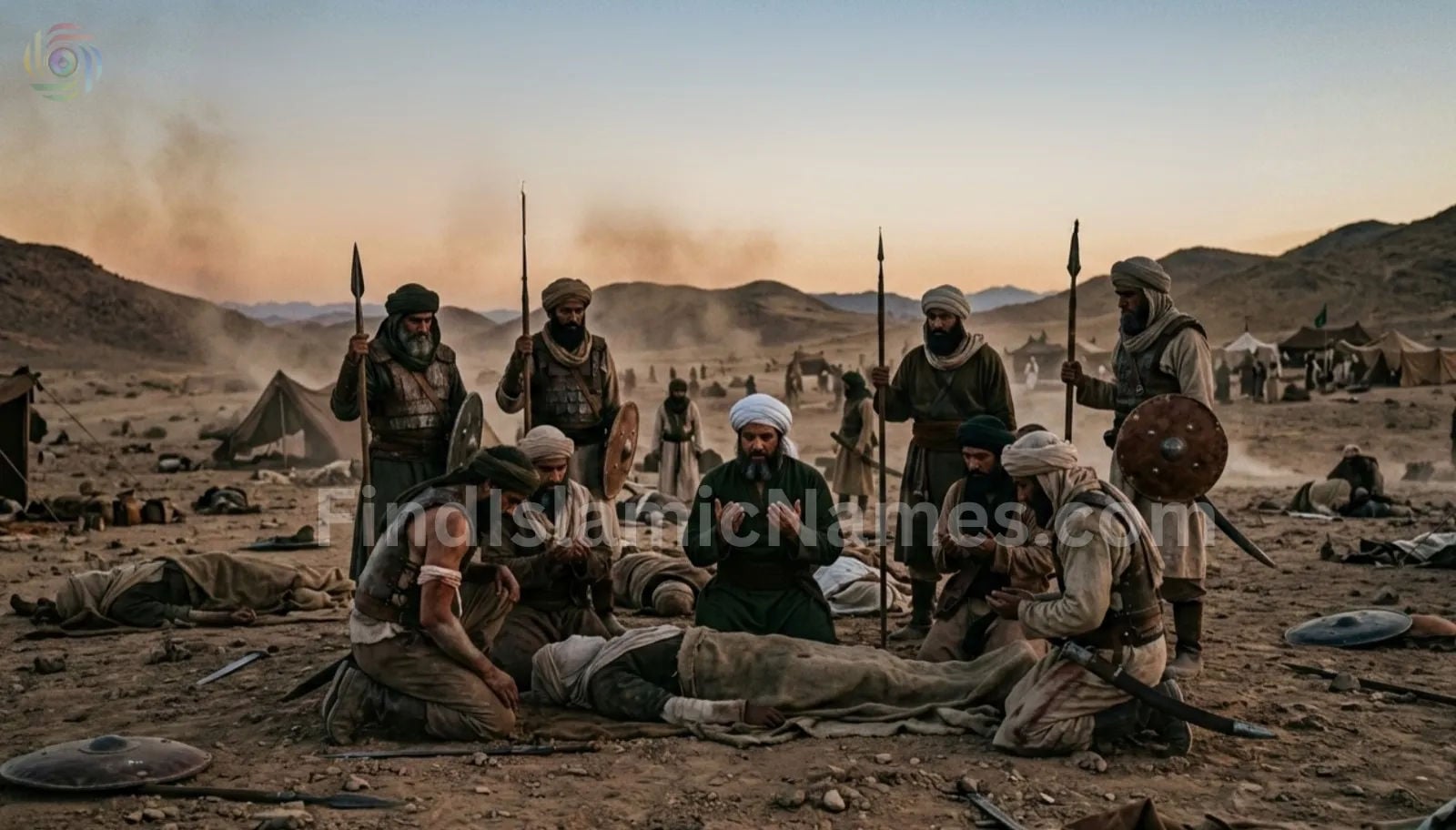
Showing 50 of 313 Badri Sahaba
Umm Kulthum bint Muhammad
أم كلثوم بنت محمد
Bint Rasulillah (Daughter of the Messenger of Allah)
Umm Kulthum means 'mother of Kulthum' (a name indicating chubby cheeks). She was the daughter of the Prophet who also married Uthman ibn Affan after her sister Ruqayya died, giving Uthman the title Dhul-Nurayn.
Zaynab bint Muhammad
زينب بنت محمد
Bint Rasulillah (Daughter of the Messenger of Allah)
Zaynab means 'fragrant tree'. She was the eldest daughter of the Prophet. She married Abu al-As ibn al-Rabi before the Prophet's mission. After the Battle of Badr, her husband eventually accepted Islam and they were reunited.
Hasan ibn Ali
الحسن بن علي
Sayyid Shabab Ahl al-Jannah (Master of Youth of Paradise), Al-Mujtaba
Hasan means 'handsome', 'good', 'beautiful'. He was the grandson of the Prophet and elder son of Ali and Fatimah. The Prophet described him and his brother as the masters of youth in paradise. He relinquished the caliphate to avoid Muslim bloodshed.
Husayn ibn Ali
الحسين بن علي
Sayyid Shabab Ahl al-Jannah (Master of Youth of Paradise), Sayyid al-Shuhada
Husayn means 'good' (diminutive of Hasan), 'little good one'. He was the younger grandson of the Prophet. He stood against injustice and tyranny and was martyred at Karbala, an event that profoundly shaped Islamic history.
Abd al-Rahman ibn Abu Bakr
عبدالرحمن بن أبي بكر
Ibn al-Siddiq (Son of the Truthful)
Abd al-Rahman means 'servant of the Most Merciful'. He was the eldest son of Abu Bakr, initially an opponent of Islam who later accepted it and became a devout companion. He declined the caliphate when offered.
Asma bint Abi Bakr
أسماء بنت أبي بكر
Dhat al-Nitaqayn (She of the Two Girdles/Belts)
Asma means 'names', 'precious'. She was the daughter of Abu Bakr and sister of Aisha. She played a crucial role in the Prophet's migration by secretly providing food and supplies, earning the title Dhat al-Nitaqayn.
Abdullah ibn Zubayr
عبدالله بن الزبير
Awwal Mawlud fil Hijra (First child born in the Hijra), Khalifat al-Haramayn
Abdullah means 'servant of Allah'. He was the son of Zubayr ibn al-Awwam and Asma bint Abi Bakr, and the first child born in Madinah after the Hijra. He was known for his bravery and piety, and later declared himself Caliph.
Umm Ayman (Barakah)
أم أيمن بركة
Umm Rasulillah ba'd ummihi (Mother of the Prophet after his birth-mother)
Barakah means 'blessing'. She was the nursemaid of the Prophet who raised him after his mother's death. She was among the earliest Muslims and was described by the Prophet as 'my mother after my own mother'.
Khabbab ibn al-Aratt
خباب بن الأرت
Min Awwaliyyin (Among the Foremost Converts), Sahib al-Aziyya (The Tormented One)
Khabbab means 'confused' or 'one who hurries'. He was among the earliest converts to Islam and endured extreme torture and persecution. He was a blacksmith whose former master placed burning coals on his bare back.
Abu al-Darda
أبو الدرداء
Hakim al-Ummah (Sage of the Ummah), Qadi Dimashq (Judge of Damascus)
His real name was Uwaymir ibn Zayd. Abu al-Darda means 'father of the shield' or 'toothless one'. He was a late convert who became one of the most knowledgeable companions. He was known for his wisdom and deep spirituality.
Sad ibn Ubada
سعد بن عبادة
Sayyid al-Khazraj (Chief of Khazraj), Al-Karam (The Generous)
Sa'd means 'happiness'. He was the chief of the Khazraj tribe in Madinah and one of the senior Ansar leaders. He was known for his immense generosity and strong leadership.
Miqdad ibn al-Aswad
المقداد بن الأسود
Awwal Faris fil Islam (First Horseman/Cavalry in Islam)
Miqdad means 'one who prepares' or 'the well-prepared'. He was among the earliest converts and one of the three horsemen during the Battle of Badr. He was the first Muslim to fight on horseback in the path of Allah.
Abdullah ibn Rawaha
عبدالله بن رواحة
Shair Rasulillah (Poet of the Messenger), Commander at Mu'tah
Abdullah means 'servant of Allah'. He was one of the Ansar leaders, a poet of the Prophet, and commander at the Battle of Mu'tah. He was known for his powerful Islamic poetry that boosted Muslim morale.
Jafar ibn Abi Talib
جعفر بن أبي طالب
Dhu al-Janahayn (Owner of Two Wings — wings grew in paradise to replace his arms cut off at Mu'tah), Abu al-Masakin (Father of the Poor)
Jafar means 'stream of water', 'river'. He was the cousin of the Prophet and elder brother of Ali. He led the Muslim migrants to Abyssinia and defended Islam eloquently before the Christian king Negus.
Uways al-Qarani
أويس القرني
Khayr al-Tabi'in (Best of the Successors), Sayyid al-Awliya (Chief of the Friends of Allah)
Uways means 'little wolf'. He was a Yemeni Muslim who never met the Prophet in person due to caring for his mother, yet the Prophet spoke highly of him and told companions to ask him for prayers. He is considered among the greatest Tabi'in.
Nuaym ibn Masud
نعيم بن مسعود
Sahib al-Hikmah fil Khandaq (Master of Strategy at the Trench)
Nuaym means 'one who lives in bliss'. He was the companion who, at the Battle of the Trench, used his diplomatic skills to sow discord among the enemy confederates, thereby contributing to their defeat.
Abu Lubaba ibn Abd al-Mundhir
أبو لبابة بن عبد المنذر
Al-Ta'ib (The Repentant)
His real name was Marwan or Bashir ibn Abd al-Mundhir. He once made a gesture to Banu Qurayza indicating their fate would be death (slaughter), then felt remorse and tied himself to a mosque pillar for days in repentance until revelation came forgiving him.
Umar ibn al-Hakam
عمر بن الحكم
Al-Ansari (The Helper)
Umar means 'life' or 'flourishing'. He was a companion who participated in multiple battles and was known for his devotion to the Prophet and Islam.
Sad ibn al-Rabi
سعد بن الربيع
Min Nuqaba al-Ansar (Among the Leaders of the Helpers)
Sa'd means 'happiness'. He was one of the twelve Ansar chiefs who pledged allegiance at the Second Pledge of Aqabah. He offered to share his wealth and even his wives with Abd al-Rahman ibn Awf upon the Muakhaat (Brotherhood) in Madinah.
Aasim ibn Thabit
عاصم بن ثابت
Hami al-Dabr (Protector Protected by Bees)
Asim means 'protector', 'guardian'. He was a skilled archer and companion whose body was miraculously preserved from desecration by a swarm of bees after he was martyred. He was the grandfather of Asim ibn Umar ibn al-Khattab.
Khubayb ibn Adi
خبيب بن عدي
Awwal Man Sanna Salatat al-Istishhad (First to establish the Sunnah of prayer before execution)
Khubayb is a name meaning 'the beloved'. He was a companion who was captured and crucified by the Quraysh. He is famous for praying two rakats before his execution — establishing the Sunnah of praying before martyrdom.
Uthman ibn Mazun
عثمان بن مظعون
Awwal Muhajir tuwuffiya bil Madinah (First Emigrant to Die in Madinah)
Uthman means 'baby bustard'. He was among the earliest converts and a deeply pious companion known for his asceticism. He was the first emigrant to Madinah to die, and the Prophet mourned him deeply.
Abu Ayyub al-Ansari
أبو أيوب الأنصاري
Mujahid Mukhaddram (Veteran Warrior), Sahib Nuzul al-Nabi (Host of the Prophet's Arrival)
His real name was Khalid ibn Zayd al-Ansari. He hosted the Prophet for seven months when the Prophet first arrived in Madinah. He participated in military campaigns even into old age, and died near Constantinople during an Islamic expedition.
Sad ibn Khaydhama
سعد بن خيثمة
Shahid Badr (Martyr of Badr)
Sa'd means 'happiness'. He was one of the twelve Ansar chiefs and drew lots with his father to determine who would participate in Badr, as both wanted to go. He was martyred at Badr.
Abu al-Haytham ibn al-Tayyihan
أبو الهيثم بن التيهان
Min Nuqaba al-Ansar (One of the Twelve Leaders of the Helpers)
His real name was Malik ibn al-Tayyihan. He was one of the twelve Ansar chiefs who first pledged allegiance at Aqabah. He was among the most devoted Ansar companions and participated in Badr.
Rafi ibn Khadij
رافع بن خديج
Al-Ansari (The Helper)
Rafi means 'elevated', 'exalted'. He was an Ansari companion who participated in many battles. He was young at Badr but participated in Uhud. He is known for narrating hadiths about agriculture and renting land.
Umm Sulaym bint Milhan
أم سليم بنت ملحان
Al-Ghulama al-Shahida (The Martyrdom-Seeker), Suwar Quran (One Who Memorized Quran)
Umm Sulaym means 'mother of Sulaym'. Her real name was Rumaythah or Sahlah. She was the mother of Anas ibn Malik and a righteous Ansari woman who accepted Islam early. She was known for her courage and patience.
Umm Haram bint Milhan
أم حرام بنت ملحان
Ula Shahidat Bahr (First Female Maritime Martyr)
Umm Haram means 'mother of Haram'. She was the sister of Umm Sulaym and a devoted companion. The Prophet told her she would be among the first Muslims to engage in naval warfare — a prophecy that came true when she participated in the naval campaign to Cyprus.
Nusayba bint Ka'b (Umm Ammara)
نسيبة بنت كعب
Mujahidat Uhud (Fighter of Uhud), Harishat al-Nabi (Guardian of the Prophet)
Nusayba means 'noble woman of good character'. She was one of the most valiant female companions who fought to protect the Prophet at the Battle of Uhud, sustaining multiple wounds. She participated in 12 battles in total.
Rufaida al-Aslamiyyah
رفيدة الأسلمية
Awwal Mumarrida fil Islam (First Nurse in Islam)
Rufaida means 'helper', 'one who provides relief'. She was the first female nurse in Islam, known for treating the wounded in battles. The Prophet permitted her to set up a tent near the mosque to treat casualties.
Abu Bakra al-Thaqafi
أبو بكرة الثقفي
Al-Mu'tiq (The Freed One), Min Siqat al-Huffadh
His real name was Nufay ibn al-Harith. He descended using a pulley (bakra) from the walls of Ta'if to join the Muslims, and was freed by the Prophet. He was known for many narrations including one about women leading nations.
Umar ibn Abi Rabi'a
أبو رهم الغفاري
Al-Ghifari (Attributed to Tribe of Ghifar)
A companion from the Ghifar tribe, an early convert known for his devotion. He participated in various expeditions and was among the reliable narrators of hadith.
Thumama ibn Uthal
ثمامة بن أثال
Sayyid Ahl al-Yamama (Chief of the People of Yamamah)
Thumama means 'millet plant'. He was the chief of the Yamamah tribe who was captured and kept tied to a mosque pillar for three days. During this time he observed the Muslims and ultimately chose to accept Islam upon release.
Wahshi ibn Harb
وحشي بن حرب
Qatil Khayr al-Shuhada wa Khayr al-Kadhdhab (Slayer of the Best of Martyrs and Worst of Liars)
Wahshi means 'wild', 'savage'. He was an Abyssinian slave who killed Hamza at Uhud on behalf of Hind bint Utbah. He later accepted Islam and earned redemption by killing the false prophet Musaylima al-Kadhdhab.
Ikrimah ibn Abi Jahl
عكرمة بن أبي جهل
Ibn Abi Jahl al-Mu'min (Believing Son of Abu Jahl), Shahid Ajnadayn
Ikrimah means 'pigeon' or 'young female camel'. He was the son of Abu Jahl, the greatest enemy of Islam. He initially fled after the Conquest of Makkah but later accepted Islam and became a devoted and brave Muslim warrior.
Safwan ibn Umayyah
صفوان بن أمية
Sayyid Quraysh (Chief of Quraysh)
Safwan means 'clear rock' or 'pure stone'. He was the son of Umayyah ibn Khalaf and one of the Qurayshi leaders. He accepted Islam after the Conquest of Makkah, though it took time. He financed Islamic expeditions generously afterward.
Abu Jandal ibn Suhayl
أبو جندل بن سهيل
Sahib Qissat al-Hudaybiyya (Companion of the Hudaybiyyah Story)
His real name was Al-Aaas ibn Suhayl. Abu Jandal means 'father of the large rock'. He was the son of Suhayl ibn Amr who was recaptured by his father before migrating. His story at Hudaybiyyah moved the Muslims deeply.
Uqba ibn Amir
عقبة بن عامر
Wali Misr (Governor of Egypt), Al-Qari al-Faqih (The Reciter and Jurist)
Uqba means 'sequel', 'consequence', 'mountain trail'. He was an Ansari companion, soldier, poet, jurist and governor. He was the first to narrate the virtue of archery in Islam and served as governor of Egypt.
Abu Marthad al-Ghanawi
أبو مرثد الغنوي
Al-Ghaniawi (from Tribe of Ghani)
His real name was Kannaz ibn Husayn. He was among the early converts and a brave companion. He was one of the group sent to Khubayb and his companions, though he survived while others were betrayed and martyred.
Abdullah ibn Amr ibn al-As
عبدالله بن عمرو بن العاص
Sahib al-Sahifa al-Sadiqah (Keeper of the Truthful Manuscript), Al-Abid al-Zahid (The Devout Ascetic)
Abdullah means 'servant of Allah'. He was the son of Amr ibn al-As and a major hadith narrator. He received special permission from the Prophet to write down hadiths, making his collection 'Al-Sahifa al-Sadiqah' the first written hadith compilation.
Amr ibn al-As
عمرو بن العاص
Fatih Misr (Conqueror of Egypt), Al-Dahiya (The Shrewd Strategist)
Amr means 'command', 'life'. He was a brilliant military strategist and statesman who accepted Islam before the Conquest of Makkah. He commanded the conquest of Egypt and served as its governor.
Muawiyah ibn Abi Sufyan
معاوية بن أبي سفيان
Katib al-Wahy (Scribe of Revelation), Amir al-Mu'minin (as first Umayyad Caliph)
Muawiyah means 'one who howls like dogs' (referring to a barking protective dog) or 'one who protects with the sword'. He was the son of Abu Sufyan, accepted Islam at the Conquest of Makkah, served as the Prophet's scribe, and later founded the Umayyad dynasty.
Amr ibn Umayya al-Damri
عمرو بن أمية الضمري
Safir Rasulillah (Envoy of the Messenger of Allah)
Amr means 'command'. He was a companion sent by the Prophet on important diplomatic missions, including delivering a letter to the Negus of Abyssinia. He was a skilled envoy of Islam.
Haritha ibn al-Nu'man
حارثة بن النعمان
Al-Jawwad al-Ansari (The Generous Helper), Sahib al-Birr (Companion of Righteousness)
Haritha means 'tiller of land', 'cultivator'. He was an Ansari companion renowned for his exceptional generosity. He donated his home near the mosque multiple times for the Prophet's wives, each time receiving blessings from the Prophet.
Sahl ibn Sad al-Saidi
سهل بن سعد الساعدي
Akhir Sahabi tuwuffiya bil Madinah (Last Companion to Die in Madinah)
Sahl means 'easy', 'gentle'. He was one of the last surviving companions of the Prophet in Madinah. He narrated many hadiths and was known for his excellent memory. He was still alive when Hajjaj ibn Yusuf ruled.
Qays ibn Sad
قيس بن سعد
Al-Qaid al-Mahir (The Expert Commander), Wali Misr (Governor of Egypt)
Qays means 'firm', 'hard'. He was the son of Sa'd ibn Ubada and a brilliant military and political leader. He was compared to a chess master in strategy. He served Ali and was the governor of Egypt for a period.
Iyad ibn Ghanam
عياض بن غنم
Wali al-Jazira (Governor of Mesopotamia)
Iyad means 'strength', 'power'. He was a companion who participated in battles and served as governor of Syria and Mesopotamia. He was known for his skill in military and administrative affairs.
Sufyan ibn Uyayna
سفيان بن عيينة
Imam al-Huffadh (Imam of the Hadith Memorizers)
Sufyan means 'the one who moves swiftly like the wind'. While primarily a Tabi' Tabi'in scholar, early references trace him to companions. He was one of the great hadith scholars of Makkah.
Utbah ibn Ghazwan
عتبة بن غزوان
Muassis al-Basra (Founder of Basra)
Utbah means 'threshold', 'one who crosses over'. He was among the earliest converts and one of the seven who first disclosed their Islam publicly. He founded the city of Basra and served as its first governor.
Al-Bara ibn Azib
البراء بن عازب
Al-Ansari (The Helper), Sahib Rasulillah (Companion of the Messenger)
Al-Bara means 'innocent', 'free from sin'. He was an Ansari companion who participated in 15 battles with the Prophet and narrated many hadiths. He lived a long life after the Prophet.
Badri Sahaba Names – Companions of the Battle of Badr
The Battle of Badr is one of the most significant events in early Islamic history. It took place in 624 CE between the Muslims of Madinah and the Quraysh of Makkah. Under the leadership of Prophet Muhammad ﷺ, a small group of around 313 Muslims faced a much larger and better-equipped army.
The companions who participated in this historic battle are known as the Badri Sahaba(Ashab al-Badr). In Islamic tradition, they are honored with a special status because of their faith (īmān), sacrifice, and loyalty during a critical moment in the development of Islam.
For this reason, many Muslims search for Badri Sahaba names with meanings, not just to learn history but also to choose meaningful and respected names for their children.
Historical Note: The Battle of Badr is mentioned in the Holy Quran in Surah Al-Anfal (Chapter 8), where Allah describes it as a "day of distinction" between truth and falsehood.
Who Are the Badri Sahaba?
The term Badri Sahaba refers to the companions of the Prophet ﷺ who took part in the Battle of Badr. According to classical Islamic sources, their number was approximately 313, including both the Muhajirun (those who migrated from Makkah) and the Ansar (the helpers from Madinah).
Despite facing a much larger force, these companions showed extraordinary courage and trust in Allah. Their participation is considered a mark of greatness, and many scholars mention their special virtue in Islamic teachings.
In several narrations, the people of Badr are described as being among the most honored companions because of their early support and sacrifice.
The honored companions who stood beside the Prophet ﷺ
Why Are Badri Sahaba Names Important in Islam?
Badri Sahaba names are not just historical records—they represent real personalities who lived with strong character and faith. Choosing these names is meaningful because:
Parents who search for Islamic names from Sahaba or companions of Badr names often prefer these names because they carry both identity and legacy.
Famous Badri Sahaba and Their Contributions
Abu Bakr as-Siddiq (RA)
The closest companion of the Prophet ﷺ, known for his unwavering support and truthfulness. First Caliph of Islam and father of Aisha (RA).
Umar ibn al-Khattab (RA)
Known for justice, strength, and leadership. Second Caliph of Islam. His conversion to Islam gave strength to the early Muslim community.
Uthman ibn Affan (RA)
Third Caliph of Islam. Known for his modesty, generosity, and compilation of the Quran into a single book format.
Ali ibn Abi Talib (RA)
Fourth Caliph of Islam. Famous for wisdom, bravery, and knowledge. Cousin and son-in-law of the Prophet ﷺ.
Hamza ibn Abdul-Muttalib (RA)
The "Lion of Allah" and uncle of the Prophet ﷺ. A symbol of courage and strength in battle. Martyred at the Battle of Uhud.
Bilal ibn Rabah (RA)
The first Mu'azzin (caller to prayer). Known for his patience, faith, and dedication despite severe persecution in Makkah.
⚔️ Historical Context of the Battle of Badr
The Battle of Badr took place near a well-known area between Makkah and Madinah. At that time, Muslims were facing increasing pressure and hostility from the Quraysh.
Although the Muslims were fewer in number and had limited resources, they remained firm in their belief. The outcome of the battle is remembered as a decisive moment that strengthened the Muslim community.
This event is often described in Islamic history as a turning point that demonstrated how faith, unity, and determination can overcome even the most difficult challenges.

The Battle of Badr is mentioned in Surah Al-Anfal (The Spoils of War)
Lessons We Learn from the Badri Sahaba
The lives of the Badri Sahaba offer valuable lessons that remain relevant today:
Because of these qualities, their names are not only historical—they are inspirational.
👶 Choosing Names from the Badri Sahaba
Many parents prefer names from the companions of Badr because they carry deep meaning and historical value.
- ✓Understand the meaning and background of the name
- ✓Learn about the life of the companion
- ✓Choose a name that is easy to pronounce in your language
- ✓Select a name that reflects positive character traits
Names like these are often chosen with the intention of connecting the child to strong values and a respected legacy.
Important Considerations
- • Always maintain respect for the companions
- • Avoid incorrect spellings or meanings
- • Verify information from reliable sources
- • Understand that these names carry religious significance
Respect and accuracy are very important when dealing with Islamic historical figures.
Related Islamic Name Collections
Frequently Asked Questions About Badri Sahaba
Who are the Badri Sahaba?▼
How many companions were in the Battle of Badr?▼
Why are their names important?▼
Can we name children after Badri Sahaba?▼
Where is the Battle of Badr mentioned in the Quran?▼
Explore More Islamic History Resources
Final Thoughts
The names of the Badri Sahaba are deeply connected to one of the most important moments in Islamic history. They represent courage, faith, and dedication in the face of difficulty.
Choosing a name from among the companions of Badr is not just about selecting a name—it is about honoring a legacy of strength and faith. These names continue to inspire and guide people across generations.
Frequently Asked Questions
QWho are the Badri Sahaba?
Badri Sahaba are the 313 companions of Prophet Muhammad (ﷺ) who participated in the Battle of Badr, the first major battle in Islamic history. They hold a special honored status in Islam and are promised Paradise.
QHow many Badri Sahaba were there?
There were 313 Sahaba who participated in the Battle of Badr. They are all honored and respected for their faith and sacrifice.
QWhat is the significance of Badri Sahaba?
The Badri Sahaba hold a special status in Islam as they fought alongside the Prophet in the first decisive battle against the Quraysh. The Prophet prayed for their forgiveness, and they are promised Paradise.
QWho were the martyrs of Badr?
There were 14 martyrs from the Muslim side in the Battle of Badr, including their leader Haritha bin Suraqa al-Ansari. The Muhajirun (emigrants) had 6 martyrs, and the Ansar (helpers) had 8 martyrs.