Badri Sahaba Names Collection
Discover the 313 brave companions of Prophet Muhammad (ﷺ) who participated in the Battle of Badr. These honored individuals hold a special status in Islamic history and are promised Paradise.Badri Sahaba names are not just historical records—they represent real personalities who lived with strong character and faith.
Download the complete list of all 313 Badri Sahaba names in PDF format.
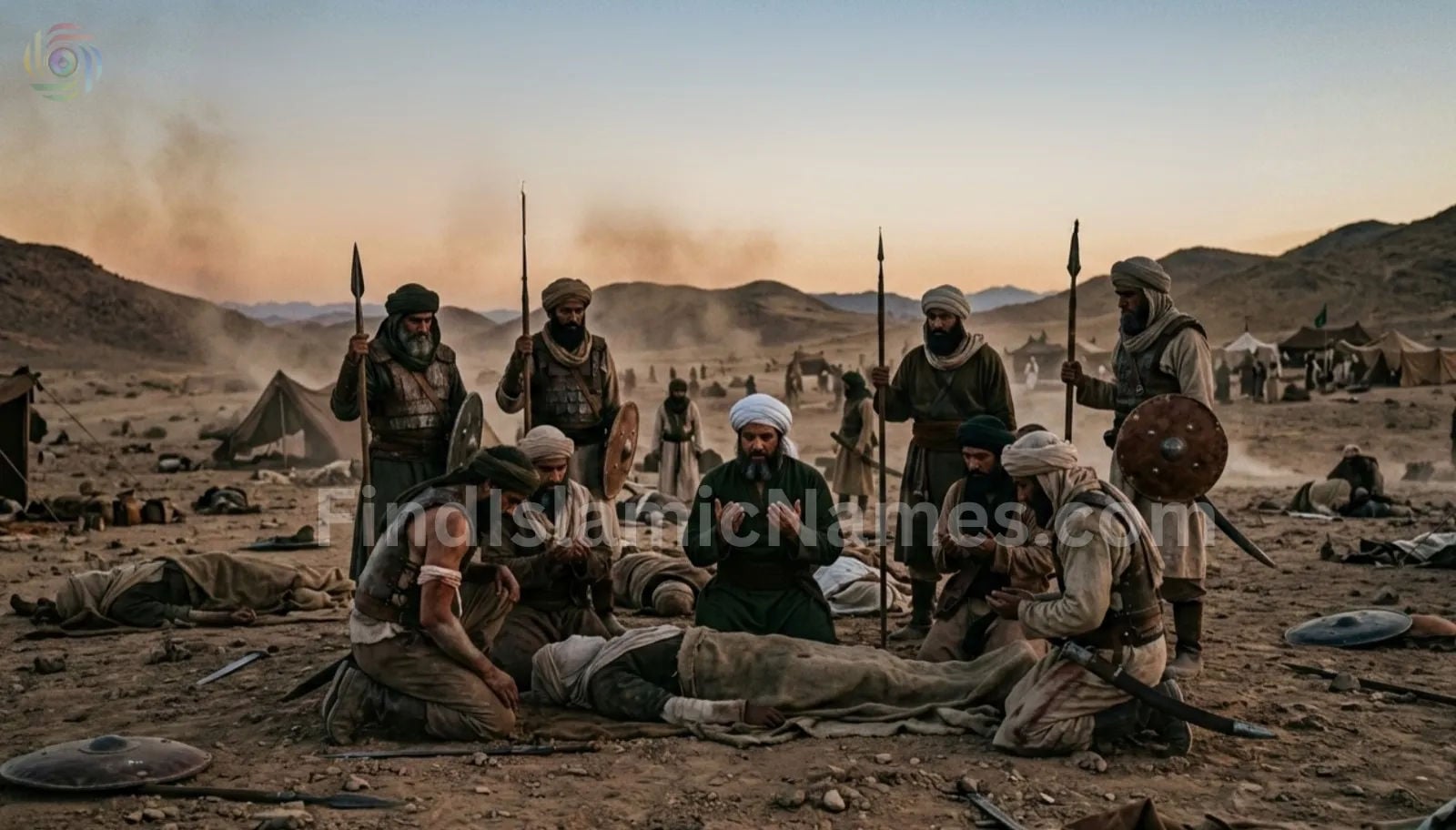
Showing 50 of 313 Badri Sahaba
Ubada ibn al-Samit
عبادة بن الصامت
Muallim al-Quran bil Misr (First Teacher of Quran in Egypt), Min Nuqaba al-Ansar
Ubada means 'worshipper', 'devoted servant'. Al-Samit means 'the silent one'. He was one of the twelve Ansar chiefs and the first to teach Quran in Egypt. He participated in Badr and all major battles.
Abu Usayd al-Ansari
أبو أسيد الأنصاري
Shahid Badr (Participant of Badr)
His real name was Malik ibn Rabi'a. He was one of the participants at Badr and was known for his remarkable memory. He narrated hadiths about the Battle of Badr. He went blind in old age.
Talhah ibn Ubaydullah al-Asghar
طلحة بن عبيدالله الأصغر
Al-Ansari (The Helper)
A companion from the Ansar known for his participation in battles and narration of hadiths. Often mentioned to distinguish from Talha ibn Ubaydullah of the Ten Promised Paradise.
Zayd ibn al-Khattab
زيد بن الخطاب
Akh al-Farooq (Brother of Al-Farooq), Shahid al-Yamama
Zayd means 'growth'. He was the elder brother of Umar ibn al-Khattab and accepted Islam before his brother. He was known for his bravery and was martyred at the Battle of Yamama fighting the false prophet Musaylima.
Nuayman ibn Amr
نعيمان بن عمرو
Mazah al-Sahabah (The Jokester of the Companions)
Nuayman means 'one in bliss'. He was known as the comedian of the Ansar and often made the Prophet laugh. Despite his jesting nature, he was a sincere Muslim and participated in battles.
Abu Qatada al-Ansari
أبو قتادة الأنصاري
Faris Rasulillah (Horseman of the Messenger of Allah)
His real name was al-Harith ibn Rib'i. He was a brave cavalry commander nicknamed 'Faris Rasulillah' (Horseman of the Messenger) by the Prophet. He participated in many battles and was known for his courage.
Sahl ibn Hunayf
سهل بن حنيف
Dariq al-Nabi (Shield of the Prophet at Uhud)
Sahl means 'easy', 'gentle'. Hunayf means 'inclining'. He was a brave Ansari companion who used his body to shield the Prophet at Uhud. He served as a governor and participated in many battles alongside Ali ibn Abi Talib.
Abu Dujana al-Ansari
أبو دجانة الأنصاري
Sahib al-Asabah al-Hamra (Owner of the Red Headband), Saif Rasulillah (Sword-bearer of the Messenger)
His real name was Simak ibn Kharasha. He was one of the bravest companions, known for his red headband worn in battle. The Prophet gave him his own sword before Uhud, and he fulfilled its right heroically.
Khalid ibn Said ibn al-As
خالد بن سعيد بن العاص
Min Awwaliyyin (Among Earliest Ten Converts)
Khalid means 'immortal'. He was among the first ten to accept Islam and migrated to Abyssinia. He was a skilled warrior and commander who led many expeditions in Syria.
Abdur Rahman ibn Khalid ibn al-Walid
عبدالرحمن بن خالد بن الوليد
Ibn Sayf Allah (Son of the Sword of Allah)
Abd al-Rahman means 'servant of the Most Merciful'. He was the son of the great commander Khalid ibn al-Walid and inherited his father's military skill. He participated in battles in Syria.
Usayd ibn Hudayr
أسيد بن حضير
Min Nuqaba al-Ansar (One of the Leaders of the Helpers)
Usayd means 'little lion'. He was one of the twelve Ansar chiefs at Aqabah and among the first in Madinah to accept Islam. He accepted Islam at the hands of Mus'ab ibn Umayr. He was known for his beautiful Quran recitation that made angels descend.
Abbad ibn Bishr
عباد بن بشر
Al-Abid al-Mujahid (The Worshipper and Fighter)
Abbad means 'devoted worshipper'. He was an Ansari companion known for his excessive worship and recitation of the Quran. He prayed through the night even while on guard duty. He was martyred at the Battle of Yamama.
Hanzala ibn Abi Amir
حنظلة بن أبي عامر
Ghasil al-Mala'ika (The one washed by Angels)
Hanzala means 'bitter melon plant'. He was a newlywed when the call to battle at Uhud came. He left his bride on their wedding night to join the battle and was martyred. The Prophet said the angels washed his body.
Abdulla ibn Jahsh
عبدالله بن جحش
Qa'id Awwal Sariyya (Commander of First Muslim Expedition)
Abdullah means 'servant of Allah'. He was the cousin of the Prophet and led the first military expedition in Islam (Sariyyat Abdullah ibn Jahsh). He asked Allah to grant him martyrdom and had his nose and ears cut off at Uhud.
Abu Lahab (Abd al-Uzza)
Note: Abu Lahab was NOT a Sahabi — he was the uncle of the Prophet and an enemy of Islam
N/A — Not a Sahabi
Note: This entry is intentionally skipped/not applicable as Abu Lahab was not a companion but an enemy of Islam condemned in the Quran.
Saud ibn Muadh
Note: Variant spelling — same as Sa'd ibn Muadh (see id 33)
Sayyid al-Aws
Variant entry — see Sa'd ibn Muadh (id 33)
Thabit ibn Qays
ثابت بن قيس
Khatib al-Ansar (Orator of the Helpers), Khatib al-Nabi (Spokesman of the Prophet)
Thabit means 'firm', 'steadfast'. Qays means 'firm'. He was the official orator and spokesman of the Ansar. The Prophet called him 'Khatib al-Ansar'. He was martyred at the Battle of Yamama.
Hind bint Utba
هند بنت عتبة
Mu'alimat al-Islam (One who came to Islam after enmity)
Hind means 'group of 100 camels' or 'India'. She was the wife of Abu Sufyan and one of the most fierce opponents of Islam. She mutilated the body of Hamza at Uhud. She later accepted Islam at the Conquest of Makkah and became a sincere Muslim.
Arbad ibn Qays
أرباد بن قيس
Al-Ansari
An early companion from the Ansar who participated in battles and narrated hadiths.
Asim ibn Amr al-Tamimi
عاصم بن عمرو التميمي
Al-Tamimi (From Banu Tamim Tribe)
Asim means 'protector'. He was a companion from the Banu Tamim tribe who participated in the early conquests of Iraq and Persia under the command of Khalid ibn al-Walid and Sad ibn Abi Waqqas.
Ziyad ibn Labid
زياد بن لبيد
Wali Hadramawt (Governor of Hadramaut)
Ziyad means 'increase', 'growth'. He was an Ansari companion who was one of the early migrants. He served as governor of Hadramaut and Yemen. He was among the six Ansar participants at Aqabah.
Rafi ibn Malik al-Ansari
رافع بن مالك الأنصاري
Awwal Man Hamala Surat al-Quran ilal Madinah (First to Bring a Full Surah to Madinah)
Rafi means 'elevated'. He was one of the six from Khazraj who first met the Prophet at Mina. He was the first person to bring a full surah of the Quran to Madinah, even before the Hijra.
Aws ibn al-Samit
أوس بن الصامت
Sahib Ayat al-Zihar (Husband mentioned in Mujadila verses)
Aws means 'gift', 'wolf'. Al-Samit means 'the silent one'. He was the husband of Khawla bint Tha'laba, the woman about whom Allah revealed Surah Al-Mujadila after she complained to the Prophet about her husband pronouncing zihar.
Khawla bint Tha'laba
خولة بنت ثعلبة
Sahiba Awal Ayat Mujadila (Companion of the Opening Verses of Al-Mujadila)
Khawla means 'female deer'. She was the Ansari woman who argued with the Prophet about her husband's zihar divorce. Allah responded to her complaint by revealing Surah Al-Mujadila, showing how Allah listens to the oppressed.
Abu al-Yasar Ka'b ibn Amr
أبو اليسر كعب بن عمرو
Asir Abbas (Captor of Abbas at Badr)
Ka'b means 'ankle bone' or 'high position'. He was a brave Ansari companion who captured Abbas ibn Abd al-Muttalib alone during the Battle of Badr — a notable feat given Abbas's stature.
Umayr ibn Wahb al-Jumahi
عمير بن وهب الجمحي
Al-Tawwab (The Repentant), Muhtadi
Umayr means 'long life'. He came to Madinah with the intent to assassinate the Prophet after Badr but upon meeting the Prophet, recognized his prophethood and accepted Islam, becoming a devoted Muslim.
Abu Raja al-Utaridi
أبو رجاء العطاردي
Al-Muammar (The Long-Lived One)
His name means 'father of hope'. He was a Tabi'i who met many companions but is often grouped due to his early conversion and extremely long life. He lived over 120 years.
Qudama ibn Mazun
قدامة بن مظعون
Shahid Badr (Participant of Badr)
Qudama means 'ancient', 'the old one'. He was the brother of Uthman ibn Mazun and an early Muslim. He migrated to Abyssinia and participated in Badr. He served as a governor under Umar.
Abdullah ibn Suhail
عبدالله بن سهيل
Shahid Badr (Martyr of Badr)
Abdullah means 'servant of Allah'. He was the son of Suhayl ibn Amr. He had been forced to apostatize in Makkah but escaped to rejoin the Muslims at Badr. He fought bravely and was martyred there.
Muawwidh ibn Afra
معوذ بن عفراء
Shahid Badr, Qatil Abi Jahl (Slayer of Abu Jahl at Badr)
Muawwidh means 'one who seeks refuge'. He was one of the two brothers (Muawwidh and Muadh) who together struck down Abu Jahl at Badr, with Ibn Masud delivering the final blow.
Muadh ibn Afra
معاذ بن عفراء
Shahid Badr, Qatil Abi Jahl (with his brother)
Muadh means 'protected'. He was the brother of Muawwidh and together they attacked Abu Jahl at the Battle of Badr. Both brothers were martyred in that same battle.
Ikrimah ibn Abu Jahl
Note: Duplicate of id 85 — Ikrimah ibn Abi Jahl
See entry 85
See entry id 85
Umayr ibn Sa'd al-Ansari
عمير بن سعد الأنصاري
Wali al-Zuhd (Governor of Asceticism)
Umayr means 'long life'. He was known for his piety and refusal to accept material rewards for his service as governor. He was so poor yet so principled that Umar remarked about his nobility of character.
Abu Rimtha al-Taymi
أبو رمثة التيمي
Sahib Wasf al-Nabi (Companion Known for Describing the Prophet)
His real name is debated (Rifa'a or Habib). He was a companion known for a specific encounter with the Prophet where he offered to treat the Prophet's ailment — and the Prophet declined. He narrated a description of the Prophet.
Jabir ibn Atik
جابر بن عتيك
Al-Ansari (The Helper)
Jabir means 'one who sets bones right', 'comforter'. He was an Ansari companion from Banu Muawiya. He participated in many battles and was at the pledge of Aqabah.
Aws ibn Thabit
أوس بن ثابت
Akh Hassan ibn Thabit (Brother of Hassan ibn Thabit)
Aws means 'gift'. He was the brother of Hassan ibn Thabit, the Prophet's poet. He was among the Ansar who participated in battles and supported the Prophet.
Hassan ibn Thabit
حسان بن ثابت
Shair Rasulillah (Poet of the Messenger of Allah)
Hassan means 'handsome', 'good'. He was the most famous poet of the Prophet's era and is considered the poet laureate of Islam. He composed poetry in defense of Islam and in praise of the Prophet.
Ka'b ibn Malik
كعب بن مالك
Shair Rasulillah (Poet of the Messenger), Sahib Tawbat Tabuk (Of the Three Forgiven after Tabuk)
Ka'b means 'ankle bone' or 'high position'. He was one of three companions who stayed behind from the Battle of Tabuk without valid excuse. His sincere repentance led to Quranic verses celebrating his forgiveness.
Hilal ibn Umayya
هلال بن أمية
Sahib Tawbat Tabuk (One of the Three Forgiven after Tabuk)
Hilal means 'crescent moon'. He was one of the three companions who missed the Battle of Tabuk without a valid excuse and were boycotted until their sincere repentance was accepted and revealed in the Quran.
Murarah ibn al-Rabi
مرارة بن الربيع
Sahib Tawbat Tabuk (One of the Three Forgiven after Tabuk)
Murarah means 'bitterness'. He was the third of the three companions who did not participate in Tabuk and were socially boycotted. Their repentance was accepted by Allah as mentioned in Surah At-Tawbah.
Uthman ibn Abi al-As
عثمان بن أبي العاص
Wali al-Ta'if (Governor of Ta'if)
Uthman means 'baby bustard'. He was the companion sent as the governor of Ta'if after it embraced Islam. He later commanded the naval expedition to Persia and participated in the conquests.
Farwa ibn Amr al-Judhami
فروة بن عمرو الجذامي
Shahid min Ajl Islam (Martyr for Embracing Islam)
Farwa means 'fur coat'. He was a Christian governor of the Byzantine frontier who secretly embraced Islam and wrote to the Prophet. When the Byzantines discovered this, he was executed — becoming a martyr for his faith.
Dihya al-Kalbi
دحية الكلبي
Sahib Jawab Rasulillah (Envoy of the Prophet's Letters), Ashbah Jibreel (Most Resembling Jibreel)
Dihya means 'the leader'. He was a handsome companion so striking in appearance that the angel Jibreel would take his form when appearing to the Prophet. He carried the Prophet's letters to foreign rulers.
Hatib ibn Abi Balta'a
حاطب بن أبي بلتعة
Sahib Badr (Participant of Badr), Katib Rasulillah (Writer of Prophetic Letters)
Hatib means 'wood gatherer'. He was a companion who participated in Badr but later sent a letter warning the Quraysh of the planned Muslim expedition to Makkah. Despite this lapse, his status as a Badr veteran saved him from execution.
Abul Aas ibn al-Rabi
أبو العاص بن الربيع
Ameen Quraysh (Trustworthy Man of Quraysh)
His name means 'father of the disobedient'. He was the husband of Zaynab, the Prophet's eldest daughter. He accepted Islam after Zaynab's death. The Prophet praised his faithfulness to his wife and returned her to him after his conversion.
Zayd ibn Arqam
زيد بن أرقم
Kashif al-Nifaq (Revealer of the Hypocrites)
Zayd means 'growth'. He was an Ansari companion who informed the Prophet of the hypocrites' conspiracy during the Tabuk expedition, leading to the revelation of Surah Al-Munafiqun.
Muadh ibn Amr ibn al-Jamuh
معاذ بن عمرو بن الجموح
Shahid Uhud
Muadh means 'protected'. He was an Ansari companion who participated in Badr and struck Abu Jahl. His father Amr ibn al-Jamuh was a notable convert who destroyed idols in Madinah.
Amr ibn al-Jamuh
عمرو بن الجموح
Shahid Uhud (Martyr of Uhud), Al-Rajil al-Janna (The Limping Man of Paradise)
Amr means 'life'. He was a chieftain who converted to Islam after his son and the companions destroyed his idol. He was lame but insisted on fighting at Uhud, saying he wished to walk in Paradise. He was martyred there.
Khunays ibn Hudhafa
خنيس بن حذافة
Awwal Zawj Hafsa (First Husband of Hafsa bint Umar)
Khunays means 'the one who stays behind'. He was the first husband of Hafsa bint Umar and was wounded at Badr. He died in Madinah from those wounds, leading the Prophet to marry his widow Hafsa.
Abu Hudhayfa ibn Utba
أبو حذيفة بن عتبة
Min Awwal al-Muhajirin (Among the Earliest Emigrants)
His real name was Mahsham or Hushaym ibn Utba. He was the son of Utba ibn Rabi'a, the Qurayshi leader. He accepted Islam early despite his father's opposition and migrated to Abyssinia. He was martyred at Yamama.
Badri Sahaba Names – Companions of the Battle of Badr
The Battle of Badr is one of the most significant events in early Islamic history. It took place in 624 CE between the Muslims of Madinah and the Quraysh of Makkah. Under the leadership of Prophet Muhammad ﷺ, a small group of around 313 Muslims faced a much larger and better-equipped army.
The companions who participated in this historic battle are known as the Badri Sahaba(Ashab al-Badr). In Islamic tradition, they are honored with a special status because of their faith (īmān), sacrifice, and loyalty during a critical moment in the development of Islam.
For this reason, many Muslims search for Badri Sahaba names with meanings, not just to learn history but also to choose meaningful and respected names for their children.
Historical Note: The Battle of Badr is mentioned in the Holy Quran in Surah Al-Anfal (Chapter 8), where Allah describes it as a "day of distinction" between truth and falsehood.
Who Are the Badri Sahaba?
The term Badri Sahaba refers to the companions of the Prophet ﷺ who took part in the Battle of Badr. According to classical Islamic sources, their number was approximately 313, including both the Muhajirun (those who migrated from Makkah) and the Ansar (the helpers from Madinah).
Despite facing a much larger force, these companions showed extraordinary courage and trust in Allah. Their participation is considered a mark of greatness, and many scholars mention their special virtue in Islamic teachings.
In several narrations, the people of Badr are described as being among the most honored companions because of their early support and sacrifice.
The honored companions who stood beside the Prophet ﷺ
Why Are Badri Sahaba Names Important in Islam?
Badri Sahaba names are not just historical records—they represent real personalities who lived with strong character and faith. Choosing these names is meaningful because:
Parents who search for Islamic names from Sahaba or companions of Badr names often prefer these names because they carry both identity and legacy.
Famous Badri Sahaba and Their Contributions
Abu Bakr as-Siddiq (RA)
The closest companion of the Prophet ﷺ, known for his unwavering support and truthfulness. First Caliph of Islam and father of Aisha (RA).
Umar ibn al-Khattab (RA)
Known for justice, strength, and leadership. Second Caliph of Islam. His conversion to Islam gave strength to the early Muslim community.
Uthman ibn Affan (RA)
Third Caliph of Islam. Known for his modesty, generosity, and compilation of the Quran into a single book format.
Ali ibn Abi Talib (RA)
Fourth Caliph of Islam. Famous for wisdom, bravery, and knowledge. Cousin and son-in-law of the Prophet ﷺ.
Hamza ibn Abdul-Muttalib (RA)
The "Lion of Allah" and uncle of the Prophet ﷺ. A symbol of courage and strength in battle. Martyred at the Battle of Uhud.
Bilal ibn Rabah (RA)
The first Mu'azzin (caller to prayer). Known for his patience, faith, and dedication despite severe persecution in Makkah.
⚔️ Historical Context of the Battle of Badr
The Battle of Badr took place near a well-known area between Makkah and Madinah. At that time, Muslims were facing increasing pressure and hostility from the Quraysh.
Although the Muslims were fewer in number and had limited resources, they remained firm in their belief. The outcome of the battle is remembered as a decisive moment that strengthened the Muslim community.
This event is often described in Islamic history as a turning point that demonstrated how faith, unity, and determination can overcome even the most difficult challenges.
The Battle of Badr is mentioned in Surah Al-Anfal (The Spoils of War)
Lessons We Learn from the Badri Sahaba
The lives of the Badri Sahaba offer valuable lessons that remain relevant today:
Because of these qualities, their names are not only historical—they are inspirational.
👶 Choosing Names from the Badri Sahaba
Many parents prefer names from the companions of Badr because they carry deep meaning and historical value.
- ✓Understand the meaning and background of the name
- ✓Learn about the life of the companion
- ✓Choose a name that is easy to pronounce in your language
- ✓Select a name that reflects positive character traits
Names like these are often chosen with the intention of connecting the child to strong values and a respected legacy.
Important Considerations
- • Always maintain respect for the companions
- • Avoid incorrect spellings or meanings
- • Verify information from reliable sources
- • Understand that these names carry religious significance
Respect and accuracy are very important when dealing with Islamic historical figures.
Related Islamic Name Collections
Frequently Asked Questions About Badri Sahaba
Who are the Badri Sahaba?▼
How many companions were in the Battle of Badr?▼
Why are their names important?▼
Can we name children after Badri Sahaba?▼
Where is the Battle of Badr mentioned in the Quran?▼
Explore More Islamic History Resources
Final Thoughts
The names of the Badri Sahaba are deeply connected to one of the most important moments in Islamic history. They represent courage, faith, and dedication in the face of difficulty.
Choosing a name from among the companions of Badr is not just about selecting a name—it is about honoring a legacy of strength and faith. These names continue to inspire and guide people across generations.
Frequently Asked Questions
QWho are the Badri Sahaba?
Badri Sahaba are the 313 companions of Prophet Muhammad (ﷺ) who participated in the Battle of Badr, the first major battle in Islamic history. They hold a special honored status in Islam and are promised Paradise.
QHow many Badri Sahaba were there?
There were 313 Sahaba who participated in the Battle of Badr. They are all honored and respected for their faith and sacrifice.
QWhat is the significance of Badri Sahaba?
The Badri Sahaba hold a special status in Islam as they fought alongside the Prophet in the first decisive battle against the Quraysh. The Prophet prayed for their forgiveness, and they are promised Paradise.
QWho were the martyrs of Badr?
There were 14 martyrs from the Muslim side in the Battle of Badr, including their leader Haritha bin Suraqa al-Ansari. The Muhajirun (emigrants) had 6 martyrs, and the Ansar (helpers) had 8 martyrs.